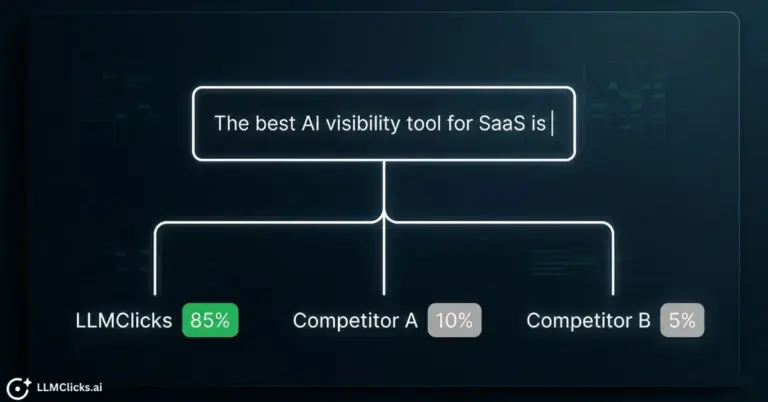
Ranking number one on Google is useless if ChatGPT recommends your competitor. Here is the bottom line on Generative Engine Optimization (GEO) for B2B SaaS:
Fight for Citations: GEO shifts your goal from ranking in a list of links to securing direct citations inside AI answers. You must prove factual accuracy to neural networks instead of just keyword relevance to crawlers.
Protect the Zero-Click Pipeline: Buyers now use AI to evaluate software without ever visiting your website. If language models cannot easily verify your product data, you become invisible to high-intent leads.
Structure Data for Machines: AI models require clear formatting to avoid hallucinations. You must deploy 40-word direct definitions, clean HTML comparison tables, and strict schema markup to become the trusted source.
It is a Monday morning in January 2026. You and your team have just pushed live a major feature update that you have been working on for months. The product team is excited, the sales team is ready to pitch, and naturally, you head over to Google to see how it looks in the search results. You type in the core problem your feature solves, expecting to see your carefully crafted landing page or your latest blog post sitting at the top of the rankings.
But instead of seeing your link, you see something else entirely.
An AI Overview sits at the very top of the page, dominating the screen. It synthesizes an answer for the user immediately, pulling data from across the web. It explains the solution well enough. It even gets the technical specifications right. But then you notice the problem that makes your stomach drop.
The AI cites your biggest competitor as the source of this information.
In that split second, you did not just lose a click. You lost the narrative. You lost the status of being the “Ground Truth” for your own product category. The user has their answer, and they have associated that solution with your competitor’s brand, not yours.
This is the new reality for SaaS marketing. For the last fifteen years, search engine optimization lead generation was a game played for relevance. We optimized our headers, tuned our keyword density, and built backlinks to prove to Google’s crawler that we were relevant to a user’s query. We were fighting to be found among ten blue links.
But today, the game has fundamentally changed. We are no longer just fighting for relevance. We are fighting for accuracy.
Large Language Models (LLMs) like ChatGPT, Gemini, and Claude do not “search” the web in the way we are used to. They retrieve information and then synthesize it. Because these models are prone to “hallucinations” confidently stating things that are factually incorrect—their algorithms have been aggressively retuned. They now prioritize sources that offer mathematically verifiable accuracy above almost everything else. They are looking for stability in a sea of noise.
This shift has birthed a critical new discipline: Generative Engine Optimization (GEO).
If traditional SEO was about convincing a machine to rank you, GEO is about convincing a machine to trust you. When an AI is constructing an answer about the best software for enterprise payroll or the most secure cloud storage, it is looking for data it can verify. If your brand provides that structured, accurate data, you become the citation. If you don’t, you are simply ignored.
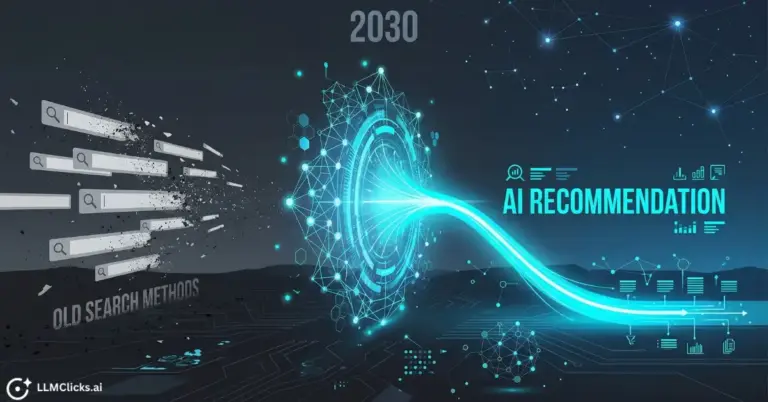
The stakes could not be higher. Gartner predicts that traditional search engine volume could drop by 25% by 2026 as users shift toward these conversational interfaces. That represents a massive chunk of your potential pipeline disappearing into zero-click interactions. If you are not optimizing your content to be the source of the answer, you are invisible to a quarter of your market.
This guide is your 2026 playbook. We are going to move beyond the high-level fluff and get into the technical weeds of how to structure your SaaS website so that you become the undeniable “Ground Truth” for your niche.
What is Generative Engine Optimization (GEO)?
To win in 2026, we first need to agree on what we are actually doing. There is a lot of noise in the market right now, with agencies slapping “AI” onto old service packages. But true GEO is a specific, technical discipline.
Generative Engine Optimization (GEO) is the multi-disciplinary practice of structuring your content, data, and digital presence so that AI language models can accurately understand, cite, and recommend your product when responding to user queries.
Understanding the difference betweenLLM visibility vs traditional SEO is critical. While SEO optimizes for SERPs, GEO optimizes for inclusion and accuracy within AI-generated responses themselves. The goal isn’t just to get clicked; it’s to get cited as the authoritative source.
The Core Distinction: Rankings vs. Citations
SEO fights for position in a list of results.
GEO fights for citation within the answer itself.
The term “Generative Engine Optimization” was first formally introduced in research from Princeton University, which analyzed how large language models retrieve and synthesize information. Their findings revealed that AI models prioritize certain content characteristics: clarity, structured data, authoritative signals, and factual consistency.
The Alphabet Soup of 2026: GEO vs. AEO vs. LLMO
To execute this strategy, we must untangle the terminology
that has flooded the market this year. It is not just about 'AI optimization.' There are three distinct layers to this new stack.
Feature
SEO (Search Engine Opt)
AEO (Answer Engine Opt)
GEO (Generative Engine Opt)
Primary Objective
Drive organic traffic through SERP rankings and clicks.
Provide a spoken, direct answer immediately.
Secure citations and mentions in AI-generated responses.
Optimization Target
Search engine crawlers (Googlebot) and ranking algorithms.
The Assistant (Siri, Alexa, Google Assistant).
Neural networks and language model retrieval systems (RAG).
Success Metrics
Rankings, Organic Traffic, CTR.
Voice Visibility, "Featured Snippet" Dominance.
Citation Frequency, Mention Accuracy, Share of Model.
Content Structure
Keyword-optimized headings, meta descriptions, internal links.
Concise, conversational answers (The "40-word rule").
Direct definitions, structured data tables, citation-worthy facts.
User Journey
User clicks through to your website from a list of blue links.
User hears the answer while driving or multitasking.
User receives synthesized info directly in the AI response with a citation.
The Technical Shift: From Crawler to Neural Network
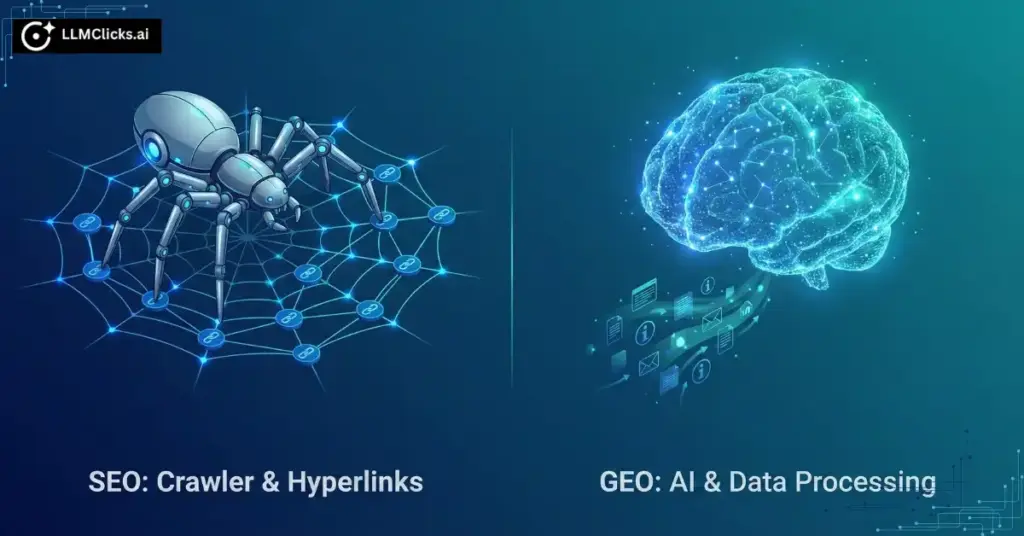
The reason we need a new acronym is that the technology has changed. SEO targets a “crawler” that indexes words on a page. It is a retrieval system.
GEO targets a “neural network” that predicts the next likely word in a sentence. It is a probabilistic system.
When Googlebot visits your pricing page, it catalogues the keywords “Enterprise Pricing” and “SaaS.” But when ChatGPT reads that same page, it is trying to understand the logic of your pricing model to answer a user who asks, “Which tool offers the best value for a team of 50?”
If your content is just keywords, the neural network cannot use it. It needs clear definitions, logical comparisons, and structured data tables to build its answer. That is the essence of generative engine optimization. It is the shift from writing for a librarian to writing for a research analyst.
Why SaaS Needs GEO Now (The Commercial Imperative)
If you are a B2B SaaS marketer, the rise of AI search is not an “awareness” problem; it is a pipeline problem. The case for GEO in B2B SaaS addresses three fundamental shifts in buyer behavior that directly impact your revenue.
1. The “Zero-Click” Discovery Journey
By 2026, it is estimated that nearly half of all top-of-funnel informational queries will be satisfied directly on the SERP or inside a chat interface8.
This does not mean people are searching less. It means they are finding answers faster.
Consider the user journey. A potential buyer asks Google, “What is the best CRM for a fintech startup?” In the past, they would click on three or four different comparison blogs, visit your site, and maybe download a whitepaper.
Today, an AI Overview or a tool like Perplexity synthesizes that answer instantly. It lists the top three options, summarizes their pros and cons, and moves on. If your content is not optimized for that synthesis, you are invisible to a massive chunk of your market. You are losing the lead before they even know you exist.
2. The Trust Gap: AI as the New Filter
B2B software buyers face an overwhelming amount of marketing content. Every vendor claims to be “the best,” “the fastest,” or “the most intuitive.” AI tools cut through this noise by synthesizing information from multiple sources and providing what appears to be an objective recommendation.
When a prospect asks ChatGPT, “What’s the best project management tool for remote engineering teams?”, they trust the AI’s synthesis more than they trust any single vendor’s landing page.
This creates a critical vulnerability: you don’t control the narrative. The AI assembles its understanding of your product from whatever content it can access and verify. Without deliberate GEO optimization, that understanding will be incomplete or incorrect. If the AI provides inaccurate information about your pricing model, feature set, or use cases, you lose the opportunity before the prospect ever visits your site.
3. Commercial Intent at Peak Efficiency
Here is the counterintuitive opportunity: being cited in AI responses for high-intent queries represents the most efficient lead generation possible.
Consider the query: “Which CRM integrates with Slack and offers custom workflow automation for under $50 per user?”
This isn’t a browsing query. This is a buyer with a specific budget, specific requirements, and immediate intent. If your product matches these criteria and the AI cites you as a solution, that reference carries more weight than any ad or content marketing piece.
Traditional SEO captures intent at various stages of the funnel. GEO, when executed properly, concentrates your visibility at the bottom of the funnel where commercial intent peaks.
4. The Developer & Technical Buyer
Finally, we cannot ignore the technical buyer. Developers and IT managers are the earliest adopters of tools like Perplexity and Claude. They use these tools to find documentation, check integration capabilities, and verify security compliance.
They are not browsing your blog. They are prompting: “Does [Product X] support GraphQL and SSO?”
If your technical documentation is gated behind a login or buried in PDFs, the AI cannot read it. It will likely answer, “I cannot confirm if Product X supports GraphQL.” And just like that, you are disqualified from the technical review. GEO ensures your technical specs are as accessible to machines as they are to humans.
The Mechanism: How "Grounding" Works
To optimize for AI, you must understand how AI validates truth. This process is central toAI visibility. It is called ‘Grounding’.
When a model like Gemini or GPT-4 generates an answer, especially for a factual query (like “What is the pricing of Salesforce?”), it does not rely solely on its pre-training data, which might be months old. It performs a retrieval step (RAG – Retrieval-Augmented Generation) to check its facts against trusted, live sources on the web.
Your goal with GEO is to be the source that “Grounds” the AI.
Types of Queries AI Prioritizes
AI platforms prioritize factual accuracy over creative synthesis for specific types of queries. These are your battlegrounds:
Definition Queries:“What is [Product Category]?”
The AI Need: A concise, encyclopedia-style definition.
Specification Queries:“Does [Product] support [Feature]?”
The AI Need: A binary Yes/No confirmed by technical documentation.
Comparison Queries:“[Your Product] vs [Competitor]”
The AI Need: Structured data (tables) that allow for side-by-side analysis.
Use Case Queries:“Best [Category] for [Industry]”
The AI Need: Contextual examples and “problem-solution” frameworks.
If you can structure your content to satisfy these specific needs, you increase your “Entity Confidence” score; the mathematical probability the AI assigns to your content being true.
The Technical Playbook – Optimizing for Accuracy
This is the core of our strategy. To win at GEO, we must move away from “fluff” and towards “structured density.” We are not just writing for humans anymore; we are formatting for machines.
The goal is to lower the “cognitive load” for the AI. If a model has to guess what your pricing is, it won’t cite you. If your data is presented in a clean, structured format, you become the path of least resistance.
Below is the 10-step technical checklist for SaaS brands in 2026.
1. The “40-Word Rule” for Direct Definitions
AI models crave concise summaries. They need a “definition fragment” they can pull directly into their answer without processing a wall of text.
The Tactic: On every high-intent page (e.g., “What is [Product]?”), ensure the H1 is immediately followed by a 40 – 60 word direct definition.
The Structure:
Question: What is [Term]?
Answer: [Term] is [concise definition in 40-60 words that directly answers the question without preamble or marketing language].
Bad Example: “In today’s fast-paced digital landscape, having a robust solution is essential…”
Good Example: “[Product Name] is a cloud-based CRM designed for enterprise sales teams, featuring AI-led lead scoring, automated sequencing, and native Salesforce integration.”
Why it works: This “answer-first” approach allows the retrieval system to grab a complete, grammatically correct explanation of your product instantly.
2. Structuring “Truth” with Data Tables
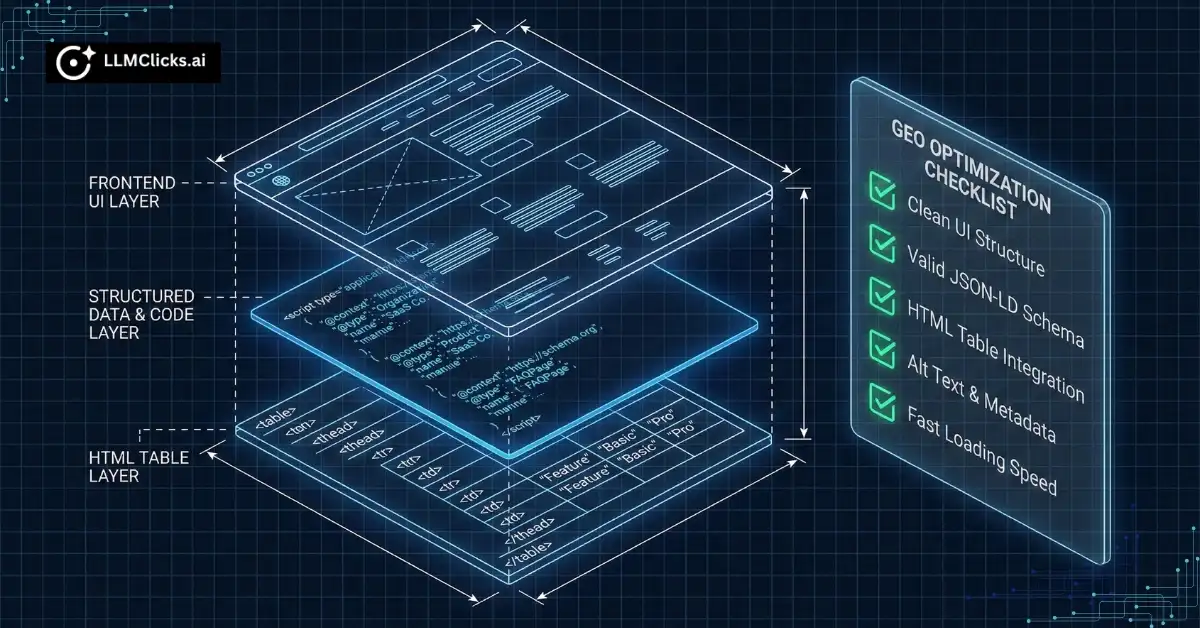
Unstructured text is hard for AI to parse. Structured data is gold. When an AI encounters a well-structured comparison table, it can accurately extract specific data points (pricing tiers, feature availability) without interpretation errors.
The Tactic: Convert your “versus” pages and pricing pages into HTML tables.
Essential Comparison Dimensions for SaaS:
Pricing tiers and what’s included at each level.
Core features and availability (Yes/No).
Integration ecosystem count.
Deployment options (cloud, on-premise, hybrid).
Security standards (SOC2, HIPAA).
The Result: When a user asks an AI to “compare features,” the model can literally scrape your table cells to construct its answer with high confidence.
3. The “Schema Graph” Strategy
Schema markup is the language of machines. In 2026, basic Article schema is not enough. You need to explicitly define your content to make it easy for AIs to extract facts.
Product Schema: Use schema.org/Product and schema.org/SoftwareApplication to explicitly define your product’s attributes.
FAQ Schema: Mark up your Frequently Asked Questions so they are eligible for “Direct Answer” slots in both Google AI Overviews and voice search.
TechArticle Schema: Use this for your API documentation and engineering blogs to signal technical depth and expertise.
4. Optimization of Non-Marketing Assets (API Docs)
This is a massive missed opportunity for most SaaS companies. Your API documentation is often your most authoritative content, yet it is frequently blocked by login screens or rendered in complex JavaScript that crawlers hate.
The Tactic: Ensure your documentation is server-side rendered (SSR) or pre-rendered. Many AI bots do not execute JavaScript efficiently. If they can’t render it, they can’t read it.
Action: Add “Use Case” summaries to the top of technical pages.
Why: This helps AI agents understand why a developer would use a specific endpoint, linking the code to the business value.
5. Entity Confidence & NAP Consistency
AI models are terrified of being wrong. They prioritize E-E-A-T signals (Experience, Expertise, Authoritativeness, Trustworthiness) to build trust. If your brand is described as a “Marketing Tool” on G2, but a “Sales Platform” on LinkedIn, the AI lowers its “Entity Confidence” score.
The Tactic: Conduct a Digital Consensus Audit.
NAP Audit: Verify that your Name, Address, and Phone number are identical across every platform: website, Google Business Profile, LinkedIn, Crunchbase, review sites, and directory listings.
Standardize Descriptions: Create a canonical 100-word product description and use it consistently across all owned properties. This becomes your “ground truth” that AI models can reference.
6. The “Statistics” Moat
In an ocean of AI-generated content, original data is the ultimate differentiator. AI cannot invent new data (without hallucinating); it must cite a primary source.
The Tactic: Publish an annual “State of the Industry” report or release aggregated usage data (e.g., “We analyzed 1M API requests and found…”).
The Payoff: You become the primary citation for that statistic for the next 12 months. Every time an AI answers a question about industry trends, it will cite your data.
7. Semantic Proximity & Contextual Vectors
Keywords are dead; long live “Vector Space.” AI understands concepts by their relationship to other concepts.
The Tactic: If you want to rank for “Marketing Automation,” you must also cover the semantically related concepts in that vector space: “Lead Scoring,” “Drip Campaigns,” “CRM Integration,” and “Churn Reduction.”
Implementation: Use tools like NeuralText or Surfer to identify missing topics in your cluster. If your competitor covers “Lead Scoring” and you don’t, the AI views their content as more “semantically complete”.
8. Verification via Third-Party Consensus
An AI trusts what others say about you more than what you say about yourself.
The Tactic: “Digital PR” is now a technical requirement. Getting cited in high-authority, neutral domains (like University research pages, TechCrunch, or reputable industry associations) serves as a “verification node” for the AI. It builds the authority signals that LLMs prioritize.
9. Freshness Protocols
LLMs have a “recency bias” for news and updates. Stale content is often filtered out of RAG responses to ensure the user doesn’t get outdated advice.
The Tactic: Add “Last Updated” dates to all core product pages. Explicitly mention the current year (e.g., “Best Practices for 2026”) in your titles and headers where relevant. Ensure screenshots reflect your current UI so the AI (using vision capabilities) sees a match between your text and your visuals.
10. Visual Proof for Multimodal Models
Models like GPT-4o are multimodal—they can “see” images.
The Tactic: Provide descriptive alt text for images and transcripts for videos. Do not just use generic stock photos; use high-resolution screenshots of your dashboard.
The Optimization: Use descriptive filenames (dashboard-analytics-view-2026.png) and detailed Alt Text that describes exactly what the software is doing. This allows the AI to “read” your product’s UI features and verify your claims.
Measuring the Unmeasurable
The biggest challenge with GEO in 2026 is attribution. There is no “Google Search Console” for ChatGPT (yet) that gives us a neat graph of impressions. However, we can track success by shifting our focus from “Traffic” to “Visibility.”
Here is how to measure if you are winning the war for accuracy.
1. Share of Model (SoM)
This is the new “Share of Voice.” It measures how often your brand is cited compared to your competitors when an AI answers a relevant query.
The Metric: What percentage of relevant AI-generated responses mention or cite your brand compared to competitors?
Citation Accuracy: When AI platforms mention your product, is the information accurate? Track instances of incorrect pricing, feature descriptions, or positioning statements.
2. The Manual Testing Framework
Since dedicated GEO tracking tools are still emerging, manual testing remains the most reliable measurement approach.
Step 1: Build a query set. Compile 20-30 queries that represent how your target buyers would search for solutions:
Category queries: “What is [product category]?”
Comparison queries: “[Your product] vs [competitor]”
Commercial queries: “[Your product] pricing”
Step 2: Test across platforms. Run your query set through ChatGPT,Perplexity SEO workflows, Claude, Gemini, and Google AI Overviews.
Step 3: Document. Note which queries trigger mentions of your brand and whether the information is accurate. Identify gaps where competitors are cited and you are not.
LLMClicks.ai (Recommended): This platform is specifically designed to track how your brand performs across AI answer engines. It helps you identify citation opportunities, monitor competitor visibility, and see exactly what content the AI is retrieving from your site. It solves the “black box” problem of AI search.
Perplexity & ChatGPT (Manual): Use the free tiers for spot-checking your “Golden Queries.”
4. Zero-Click Search Volume
If your GEO strategy is working, you should see a strange phenomenon: your organic traffic might be flat, but your “Navigational Search” volume (people searching for your brand name directly) will rise. This indicates that users are discovering you on AI platforms (zero-click) and then coming to Google simply to navigate to your site to convert.
Do You Need a Generative Engine Optimization Agency?
Implementing this playbook requires a rare mix of skills: Data Science (to structure entities), Digital PR (to secure authoritative citations), and heavy Technical SEO (to optimize rendering).
This leads many founders to ask: “Which agencies provide generative engine optimization services for businesses?”
When to Consider Specialized GEO Support
You should consider working with a GEO agency or specialist if:
Your internal team lacks bandwidth to execute a comprehensive strategy while maintaining existing SEO.
You are seeing competitors gain visibility in AI responses while your brand is absent.
You have complex technical products (API-first, DevTools) that require sophisticated documentation optimization.
Your “Entity Confidence” score is low, leading to frequent hallucinations about your brand.
A specialized generative engine optimization agency brings the advantage of established relationships for citations and the technical tooling to audit your “Entity Confidence” score across the web.
Getting Started: Your 30-Day GEO Implementation Plan
Theory without action doesn’t move metrics. Here is a practical 30-day roadmap to begin implementing GEO for your SaaS product.
Days 1-7: Audit and Baseline
Day 1-2: Build your target query set (20-30 queries) representing high-intent buyer searches.
Day 3-4: Test your query set across ChatGPT, Perplexity, and Gemini. Document visibility and accuracy.
Day 5: Perform a comprehensive audit (use our120-Point On-Page Audit guide). Check if your H1 is followed by a 40-word definition.
Day 7: Create a prioritized list of “Hallucination Risks”; areas where the AI is currently getting it wrong.
Days 8-14: Quick Wins (Structure & Schema)
Day 8: Implement Product and FAQ schema on your primary landing pages.
Day 10: Update your “What is [Product]” page with a clear, concise definition (The 40-word rule).
Day 12: Build a comprehensive “Versus” page with an HTML comparison table.
Day 14: Standardize your N.A.P. and company description across LinkedIn, G2, and your footer.
Days 15-30: Content & Measurement
Day 15: Ungate your core API documentation or technical guides (if relevant).
Day 20: Publish a “State of the Industry” post with original data/stats.
Day 30: Review your “Share of Model” metrics and plan the next sprint.
Conclusion: Be the Source, Not Just the Search Result
The era of “gaming” the algorithm is ending. The era of training the algorithm has begun.
In 2026, your website is no longer just a digital brochure for human readers; it is a structured database for machine learning models. By optimizing for accuracy, structure, and authority, you do more than just improve your AI visibility; you build a better, clearer resource for your human customers, too.
Generative Engine Optimization is not a “hack.” It is a fundamental shift in how we structure the world’s information. The brands that win in this new era will be those that realize their primary marketing asset is not their “voice,” but their truth.
Action Item: Don’t let AI hallucinate your value. Start today by auditing your API documentation and standardizing your “About Us” boilerplate across the web.
Frequently Asked Questions (FAQ)
Q1. What is Generative Engine Optimization (GEO)?
Ans: Generative Engine Optimization (GEO) is the practice of structuring website content and data to ensure it is cited, summarized, and recommended by AI-powered search engines like ChatGPT, Perplexity, and Google AI Overviews. Unlike traditional SEO, which focuses on ranking links, GEO focuses on establishing “Entity Confidence” so that AI models trust your brand as a primary source of facts.
Q2. What is the difference between SEO and GEO?
Ans: The main difference is the optimization target. SEO (Search Engine Optimization) targets crawlers (like Googlebot) to rank a URL in a list of blue links. GEO (Generative Engine Optimization) targets neural networks (like GPT-4) to secure a citation within a synthesized answer. While SEO relies on keywords and backlinks, GEO relies on structured data, content accuracy, and statistical authority.
Q3. How do I optimize my website for AI search engines?
Ans: To optimize for AI search, focus on “Grounding“ your content. This involves three key steps:
Structure Data: Use schema markup (like FAQ and Product schema) and HTML tables for comparisons.
Definitive Answers: Start key pages with 40-60 word direct definitions of the topic.
Entity Consistency: Ensure your brand’s description and contact info are identical across all platforms (LinkedIn, G2, Website) to build trust with the AI.
Q4. Why is GEO important for B2B SaaS companies?
Ans: GEO is critical for B2B SaaS because 48% of B2B buyers now use AI tools for vendor research before visiting a website. AI models act as a filter; if your software isn’t cited in the AI’s initial shortlist, you miss the “Zero-Click” discovery phase. Optimizing for GEO ensures your pricing, features, and use cases are accurately represented when decision-makers ask AI for recommendations.
Q5. What are the best tools for tracking Generative Engine Optimization?
Ans: As of 2026, the leading tools for tracking AI visibility include LLMClicks.ai, which monitors “Share of Model” and citations across multiple AI engines. Other methods include manual testing using “Golden Queries” on ChatGPT and Perplexity, and using emerging features in enterprise SEO platforms that track AI Overview presence.
Shripad Deshmukh
Shripad Deshmukh is a 4x SaaS founder with 15 years of SEO expertise. After building industry-leading platforms like GMB Briefcase and Agency Simplifier, he founded LLMClicks.ai. Today, Shripad pioneers Generative Engine Optimization (GEO) to help brands engineer technical visibility across AI search engines like ChatGPT, Perplexity, and Gemini.