Published on: 17-Feb-2026 | 3600 words | 15-minute read
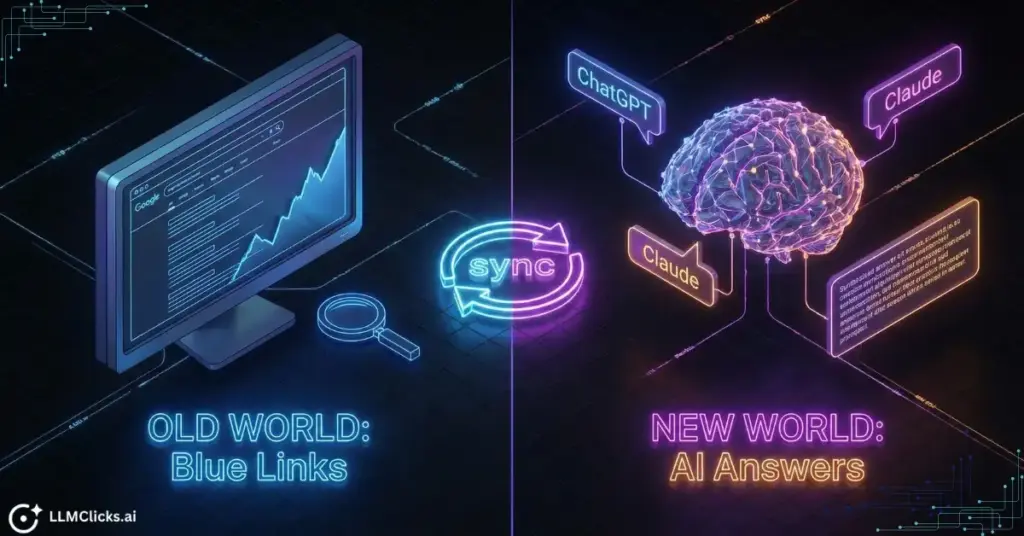
The “Blue Link” era is officially over.
For two decades, the goal of SEO was simple. You wrote content, built backlinks, and tracked your position on a static list of 10 blue links. If you ranked #1, you won.
That reality is gone.
According to Gartner, organic search engine traffic is projected to drop by 50% by 2028 as consumers shift toward Generative AI. We are already seeing the impact today. Over 60% of searches now end without a click because Google’s AI Overview or a chatbot answers the user immediately.
In this new environment, ranking first on Google is no longer the finish line. It is just a data point.
If you rank #1 for “best CRM software” but ChatGPT tells the user that your competitor is cheaper and easier to use, you have lost the customer. You lost them before they even visited your website.
This creates a dangerous blind spot for marketers.
Traditional tools like Google Search Console, Ahrefs, and Semrush are excellent at tracking links. They can tell you exactly where you rank on a search results page. However, they are completely blind to answers. They cannot tell you if ChatGPT is recommending your brand. They cannot warn you if Claude is hallucinating your pricing. They cannot track your Share of Voice inside the black box of an LLM.
To win in 2026, you cannot rely on a single dashboard anymore.
You need a Hybrid SEO Stack.
This is the core conflict of LLM SEO vs. Traditional SEO: one is about retrieval (Google), and the other is about synthesis (ChatGPT). You need to optimize for both the search engine and the answer engine.
We tested the top tools in the market to bring you the 7 essentials for 2026. This list goes beyond basic AI writing assistants. It focuses on the infrastructure, analytics, and visibility tracking you need to survive the platform shift.
It starts with the only tool that actually tells you what the AI is saying about your brand.
What Makes an "AI SEO Tool" in 2026? (Selection Criteria)
Most marketers hear “AI SEO” and immediately think of automated blog writers.
That mindset belongs in 2023.
While content generation is useful, the best AI SEO tools for 2026 are not just about writing faster. They are about measuring, optimizing, and protecting your brand presence across a fragmented landscape of search engines and chatbots.
To select the top tools for this list, we evaluated software based on three critical capabilities that modern brands require.
1. Beyond Traditional Rank Tracking Software
For twenty years, rank tracking software has been the single source of truth for SEO performance. It tracks position, volume, and clicks on Google.
In 2026, this data is insufficient.
A traditional rank tracker cannot see inside a conversation. It cannot tell you if a user asked ChatGPT for a recommendation and your brand was excluded. The tools we selected had to offer visibility into this “dark” traffic, providing insights that go beyond blue links.
2. Deep AI Analytics and Accuracy
The most dangerous risk to your brand today is not low rankings. It is an AI hallucination.
If an AI model tells a potential customer that your product lacks a specific feature or costs three times its actual price, that is a lost sale you will never see in Google Analytics.
We prioritized tools that offer sophisticated AI analytics. These platforms do more than count keywords. They analyze the sentiment and accuracy of the answers generated about you. They alert you when an AI model gets your facts wrong so you can correct the record.
3. Integration with the “Hybrid” Workflow
The reality is that Google is not dead. You still need to rank for traditional queries while simultaneously optimizing for answer engines.
The ideal software stack does not force you to choose between the two. It integrates. The tools on this list work alongside your existing workflow to create a comprehensive strategy that covers both search retrieval and AI synthesis.
The 7 Best AI SEO Tools for 2026 (Ranked & Reviewed)
The tools selected below represent the new standard for digital visibility. We have prioritized software that offers unique data, accurate analytics, and the ability to track performance across the entire search landscape.
1. LLMClicks.ai (Best for AI Visibility & Reputation Tracking)
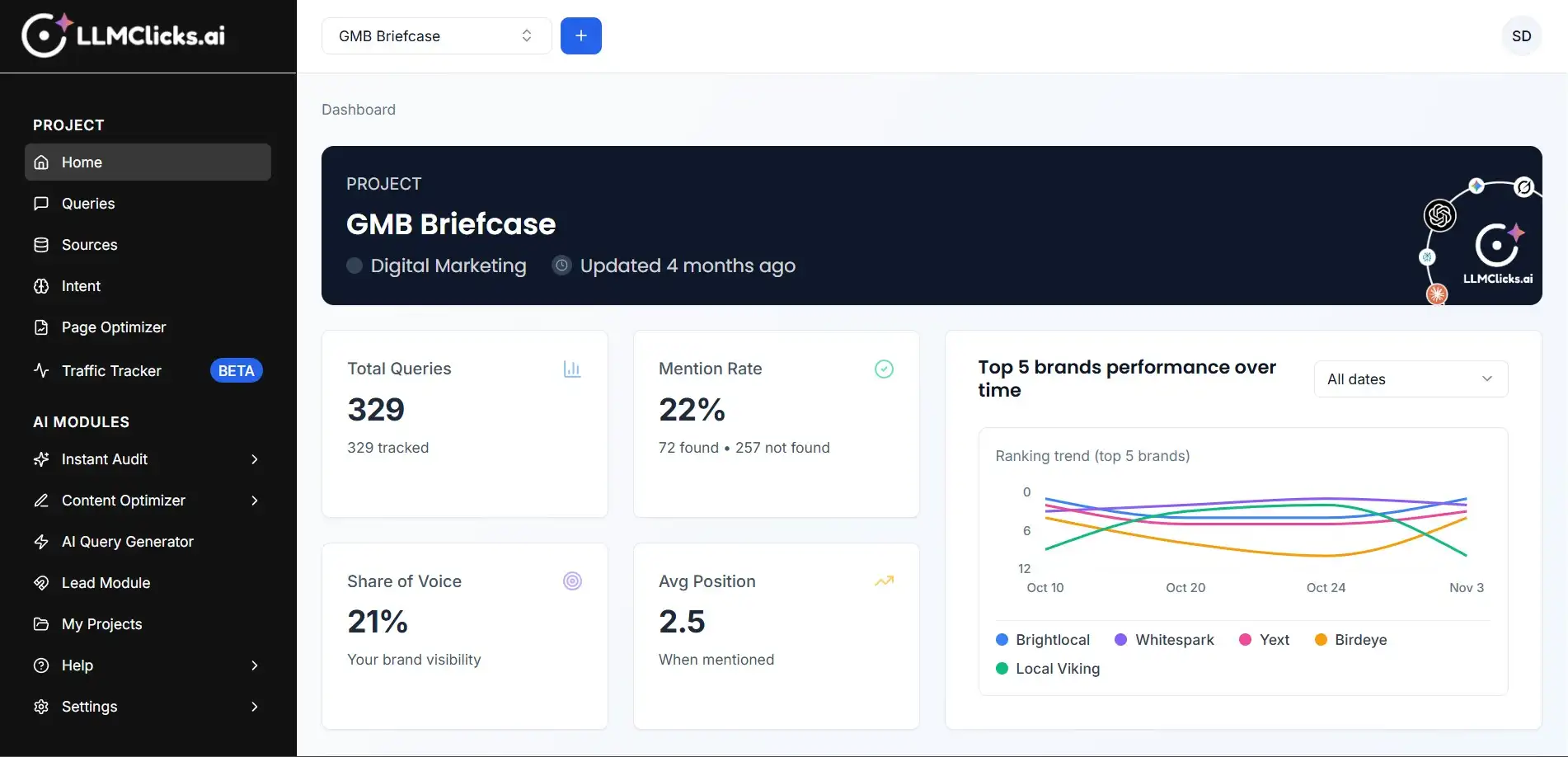
If Google Search Console is your dashboard for the open web, LLMClicks.ai is your dashboard for the black box of AI.
Most marketers have no idea what ChatGPT or Perplexity is saying about their brand. They guess. They hope. They manually type prompts into a chat window and assume that one answer represents reality.
LLMClicks.ai solves this blind spot. It is the only dedicated analytics platform built to track your Share of Voice and Sentiment inside Large Language Models.
Why It Is Essential for 2026
Traditional rank tracking software measures links. LLMClicks measures mentions. In an era where users get answers directly from AI without clicking a website, this distinction is critical. You need to know if the AI is recommending your product or if it is hallucinating incorrect pricing that kills your conversion rate.
Key Features
AI Visibility Analytics: The dashboard provides a clear Mention Rate across platforms like ChatGPT, Claude, Gemini, and Perplexity. You can see exactly how often your brand was found versus missed in response to specific user queries.
Hallucination & Sentiment Tracking: It does not just count mentions. It analyzes them. The tool flags responses as Positive, Neutral, or Negative critical for AI Brand Reputation Management, allowing you to catch hallucinations before they spread.
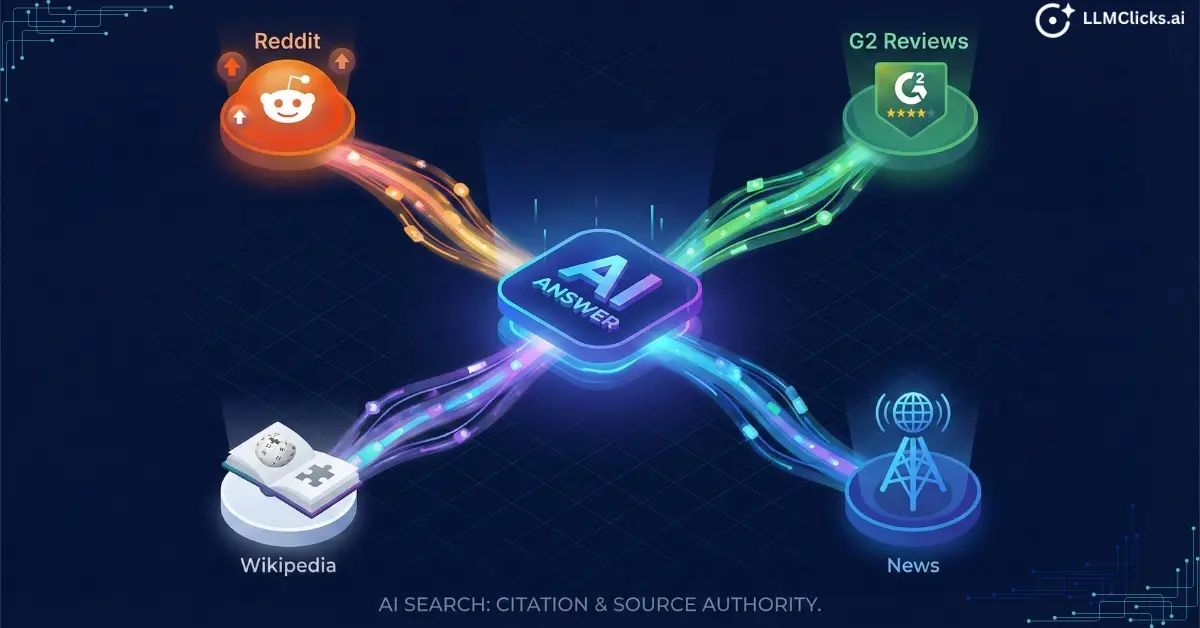
Source Citation Rankings: The tool identifies exactly which websites the AI is citing to form its answer. If you see that Perplexity is pulling data from a specific Reddit thread or review site, you know exactly where to focus your optimization efforts.
LLM Traffic Tracker: This feature distinguishes between a human visitor and an AI crawler. It tracks bot visits from GPTBot or ClaudeBot in real-time, giving you early warning on which pages are being indexed for future answers.
Who It Is For
This is the must-have tool for SEO Agencies. (For a direct feature breakdown against competitors, read our in-depth comparison of Top AI Visibility Tracker tools) that need to prove value beyond traditional rankings, and In-House Brand Teams that need to report on brand safety and reputation to their executives.
2. Semrush (Best for Traditional Keyword Research & Market Data)
While AI is the future, traditional search is not dead. Semrush remains the undisputed king of traditional market data.
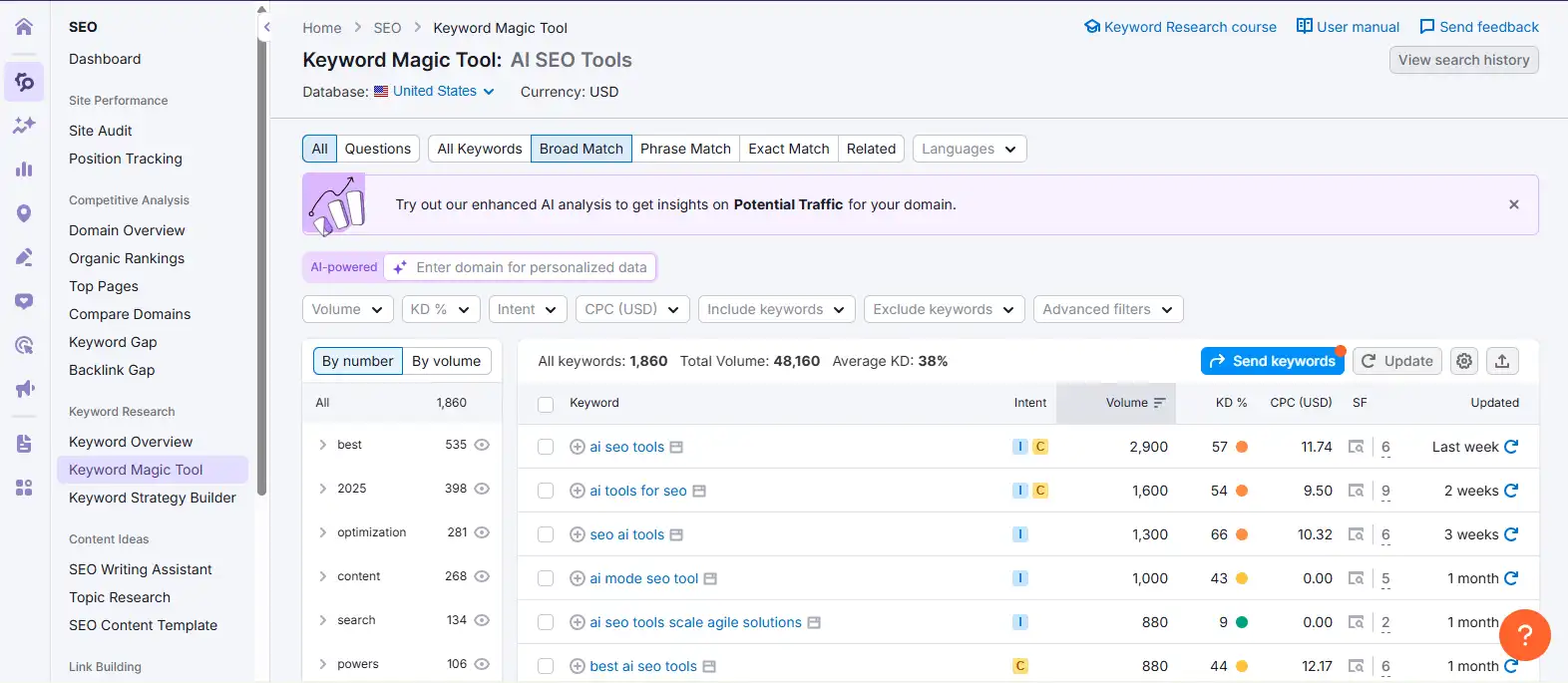
You cannot build a hybrid strategy without foundational data. To appear in an AI answer, you often need to rank in the traditional search results that feed it. Semrush provides the raw material search volume, keyword difficulty, and backlink gaps—that informs your broader strategy.
Why It Is Still a Top Contender
Semrush has aggressively integrated AI into its workflow. Its Copilot feature acts as a personal AI assistant, analyzing your site performance and suggesting quick fixes. However, its core value remains its massive database of traditional search queries.
Key Features
Keyword Magic Tool: The industry standard for finding high-volume search terms. You use this data to understand what users are searching for before you optimize for how AI answers it.
Site Audit: A comprehensive technical crawler that identifies broken links and core web vital issues. Since AI bots are less forgiving than Googlebot, keeping a technically healthy site is a prerequisite for AI visibility.
AI Writing Assistant: A built-in plugin that helps writers optimize content for readability and SEO keywords in real-time.
The Verdict
Semrush is your map for the Old World of search. It tells you where the traffic is. You use Semrush to find the opportunity, and you use LLMClicks to track if you successfully captured the conversation.
3. Surfer SEO (Best for Content Optimization & NLP)
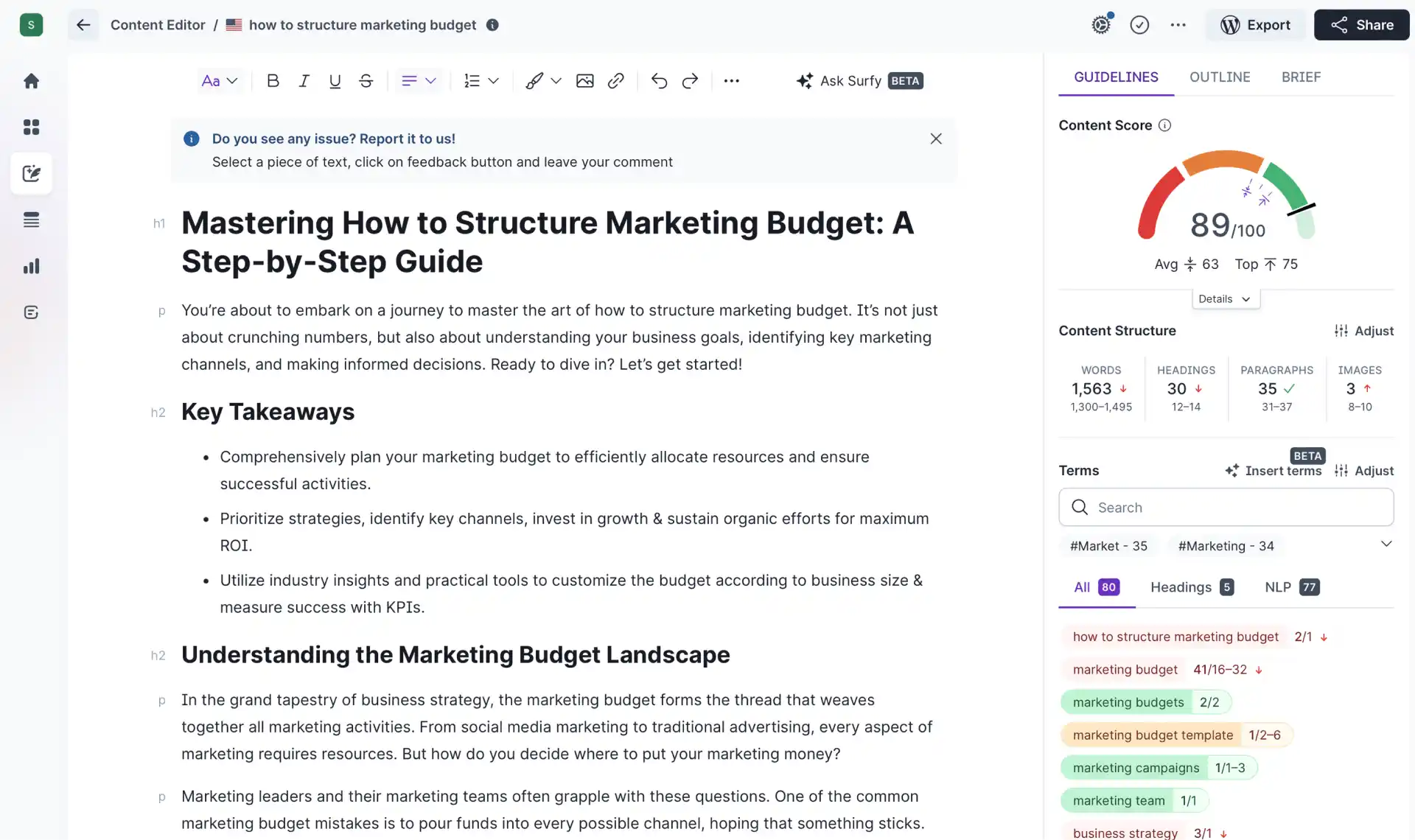
Source: surferseo.com
Ranking in 2026 requires more than just repeating a keyword five times. It requires “Entity Coverage.”
AI models like Google’s Gemini and OpenAI’s GPT-4 do not just read words. They understand concepts. If you write an article about “AI Marketing” but fail to mention related concepts like “predictive analytics” or “customer segmentation,” the AI views your content as shallow and authoritative.
Surfer SEO is the standard for solving this problem.
It uses Natural Language Processing (NLP) to analyze the top-ranking pages and tell you exactly which entities, terms, and questions you must cover to be seen as an expert. This makes it the perfect bridge between traditional SEO and AI optimization.
Why It Is Essential for 2026
You can write the best answer in the world, but if the AI does not recognize the context, it will not cite you. Surfer ensures your content is structurally sound. This is the foundation of Generative Engine Optimization (GEO) for SaaS, formatting your data so LLMs can easily read it.
Key Features
Surfer AI: This feature goes beyond basic writing assistants. It generates fully optimized articles based on real-time SERP analysis, ensuring your draft is competitive from day one.
Content Score: A simple metric that tells you if your page is optimized enough to publish.
Keyword Surfer: A browser extension that provides volume data directly in search results, helping you spot opportunities while you browse.
The Verdict
Surfer SEO ensures you have the right content. You use Surfer to build the asset, and you use LLMClicks to track how the AI uses it.
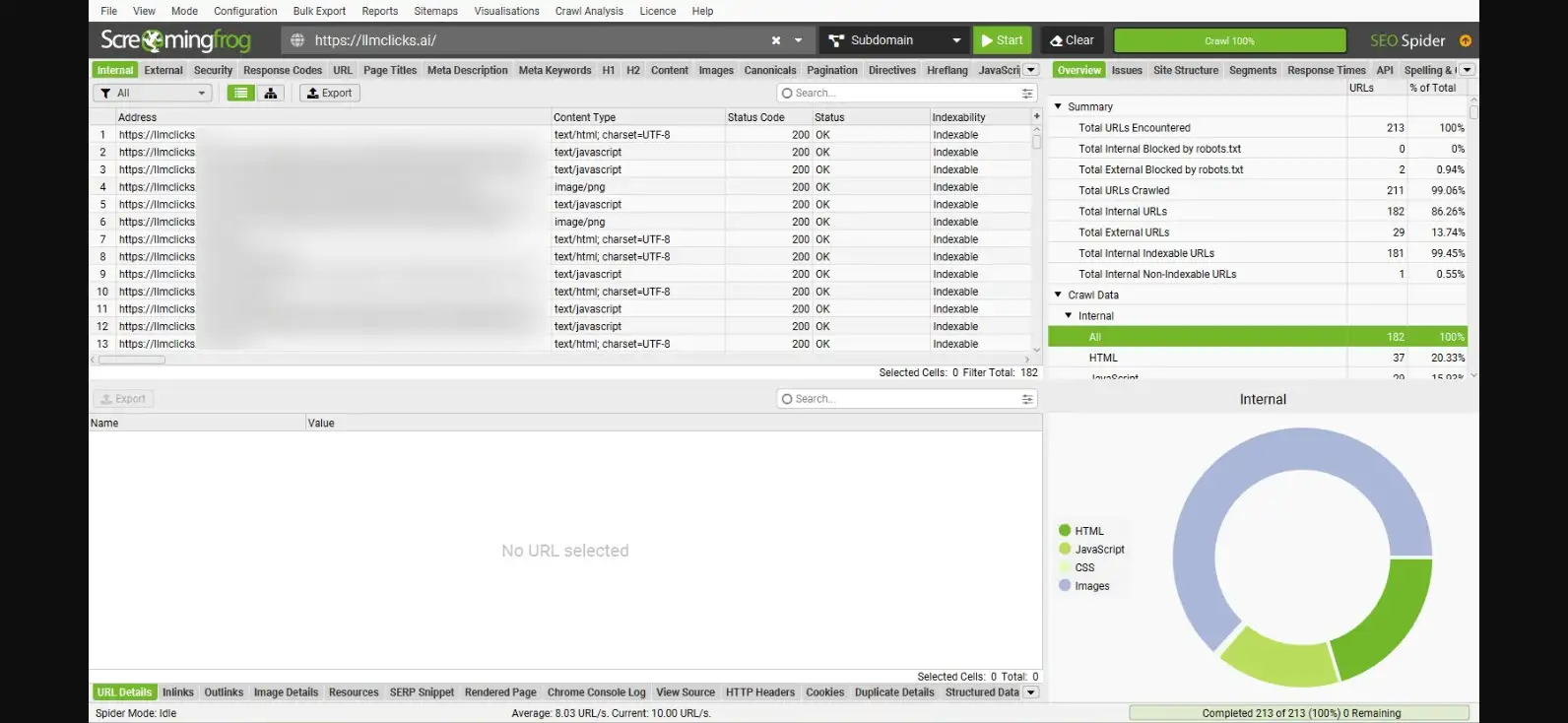
4. Screaming Frog (Best for Technical SEO & Infrastructure)
You cannot be cited if you cannot be crawled.
Screaming Frog is not a generative AI tool, but it is perhaps the most critical piece of infrastructure for AI visibility.
AI bots like GPTBot, PerplexityBot, and ClaudeBot are voracious crawlers, but they are often stricter than Googlebot. If your website relies heavily on JavaScript, has broken canonical tags, or blocks bots via a messy robots.txt file, you are effectively invisible to the AI.
Why It Is Essential for 2026
An AI answer engine cannot hallucinate a citation for a page it cannot read. Screaming Frog acts as the mechanic for your website. It crawls your site exactly like a bot would, identifying the technical roadblocks that prevent LLMs from scraping your content.
Key Features
JavaScript Rendering: Many modern sites look empty to basic bots. Screaming Frog can render pages just like a browser, showing you exactly what the AI sees (or misses).
Log File Analysis: This allows you to see exactly which bots are hitting your site. You can verify if OpenAI or Anthropic are actually crawling your key pages or if they are ignoring you entirely.
Visual Site Architecture: A messy site structure confuses AI models trying to understand the relationship between your products. This tool visualizes your internal linking so you can create clear pathways for bots.
The Verdict
Screaming Frog is the gatekeeper. Before you spend money on content or tracking, run a crawl here to ensure the door is actually open for the AI.
5. Perplexity (Best for Competitor Research & “Answer Engine” Analysis)
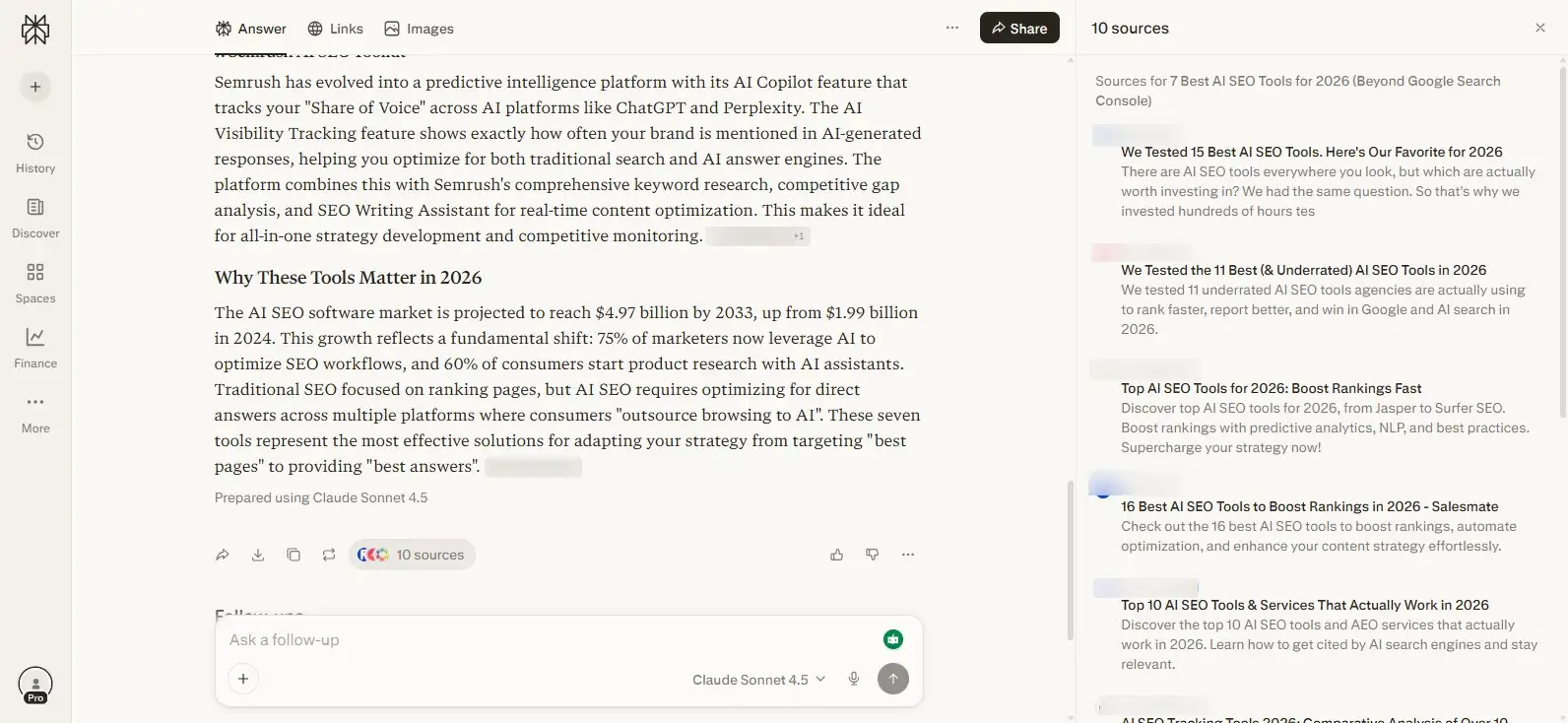
Stop thinking of Perplexity as just a search engine. Think of it as the ultimate competitor research tool.
In traditional SEO, you Google a keyword to see who ranks #1. In AI SEO, you ask Perplexity a question to see who is cited. This distinction is everything.
Perplexity is essentially a “citation engine.” It reads live data from the web and synthesizes it into an answer with footnotes. By analyzing these answers, you can reverse-engineer exactly why a competitor is being recommended over you.
Why It Is Essential for 2026
You need to see the ‘Ground Truth.’ We analyzed 30 Perplexity answers and found that it relies heavily on specific authority signals like Reddit and G2. If Perplexity says your competitor is the “best CRM for small business” because of a specific G2 review or a Reddit thread, you know exactly where you need to build presence.
Key Features
Pro Search: This mode allows you to dive deep into specific verticals like “Academic” or “Social Media,” helping you find niche citations you might miss on Google.
Collections: You can organize your research into permanent threads, essentially building a monitored feed of how AI answers questions about your industry over time.
Pages: Perplexity can turn your research threads into shareable articles. This is a powerful way to test how AI synthesizes information before you publish it on your own site.
The Verdict
Don’t just search on Perplexity. Spy on it. Use it to understand who the AI trusts so you can become that trusted source.
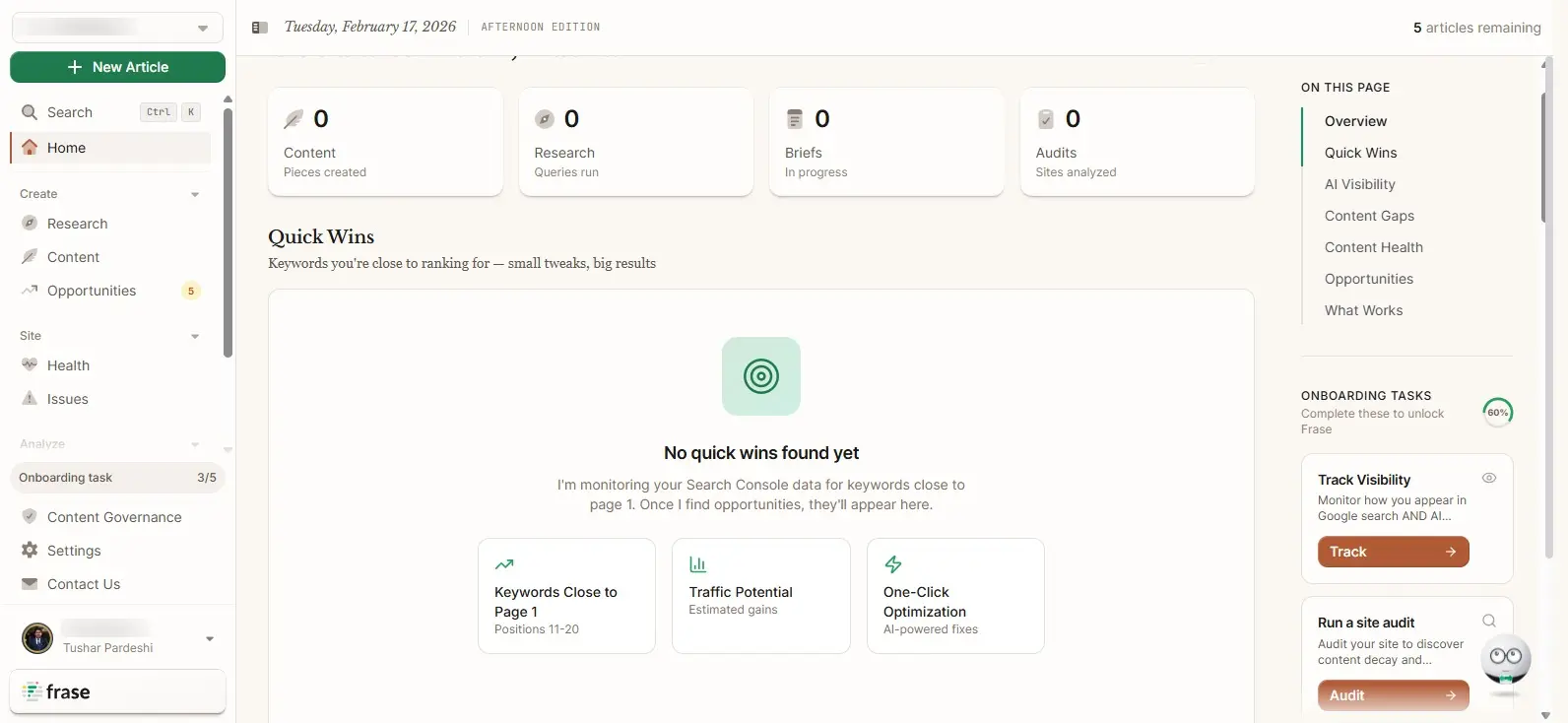
6. Frase (Best for Answer Engine Optimization / AEO)
If Surfer SEO is for long-form content, Frase is for answers.
Answer Engines (like ChatGPT and Google’s AI Overview) love structure. They love clear definitions, bulleted lists, and direct answers to specific questions. Frase is built entirely around this “Question-Answer” architecture.
It scrapes the “People Also Ask” boxes and forums to find the exact questions your customers are asking. Then, it helps you format your content to answer those questions in a way that is easy for AI bots to extract and cite.
Why It Is Essential for 2026
Ranking in the “Zero-Click” future means winning the snippet. Frase helps you structure your content into modular blocks that AI models can easily parse. Instead of a wall of text, you provide the clear, structured data that machines crave.
Key Features
Question Research: Frase identifies the specific questions users are asking about your topic, grouped by intent. This ensures you aren’t just targeting keywords, but answering actual user needs.
Content Briefs: It automatically generates detailed outlines based on the top 20 search results, saving hours of manual research time.
AI Writer (Answer Focus): Unlike generic writers, Frase’s AI is trained to write concise, factual answers that are optimized for featured snippets and voice search.
The Verdict
Frase is your architect. Use it to build the structure of your content so that LLMs can easily dismantle it and use your brand as a building block in their answers.
7. Originality.ai (Best for AI Detection & Quality Control)
In a world flooded with AI-generated content, “Human” is a premium signal.
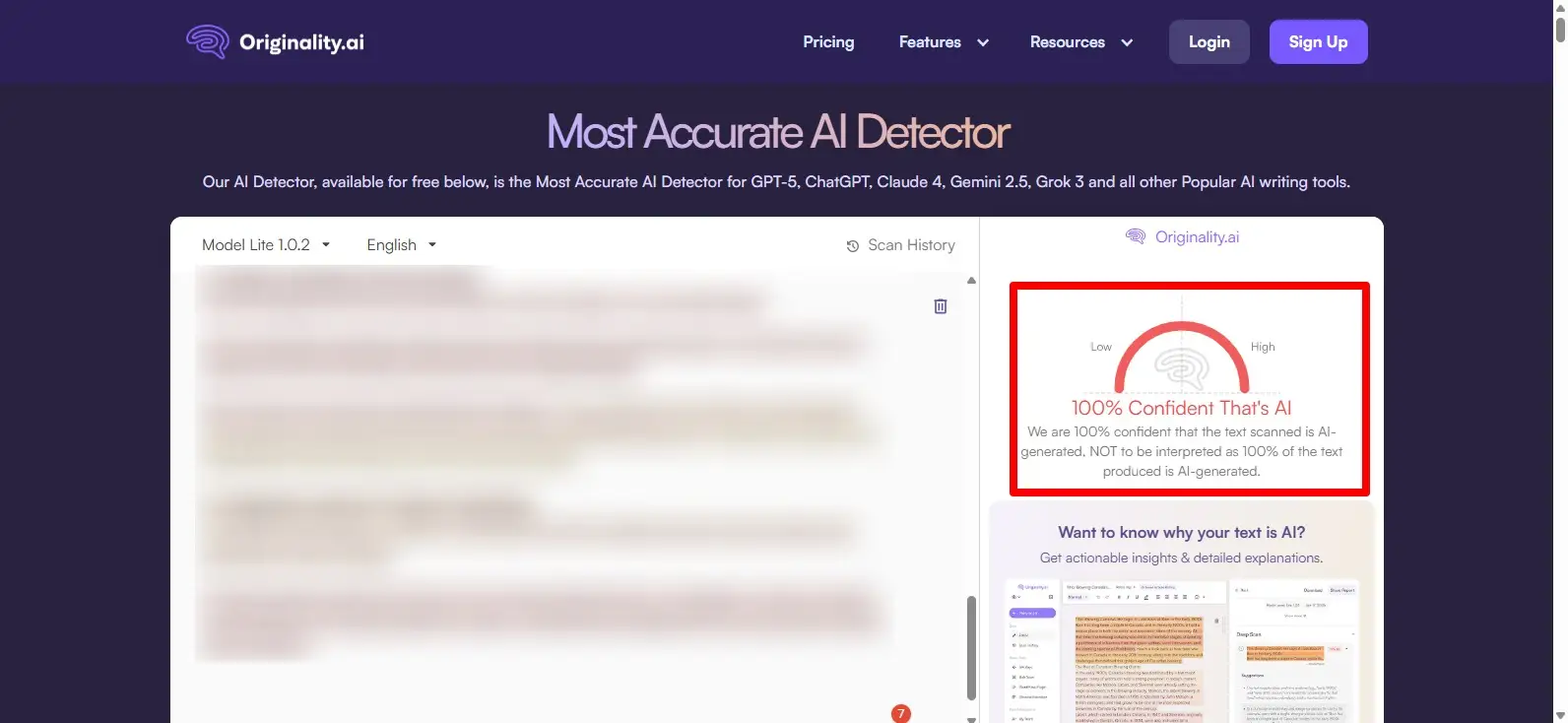
Google and other platforms are getting better at identifying low-quality, mass-produced AI content. If your site is flagged as “SpamBrain” fodder, you disappear from the index entirely. Originality.ai is your insurance policy.
It is the most accurate AI content detector on the market. It checks if your writers (or your agencies) are taking shortcuts with ChatGPT.
Why It Is Essential for 2026
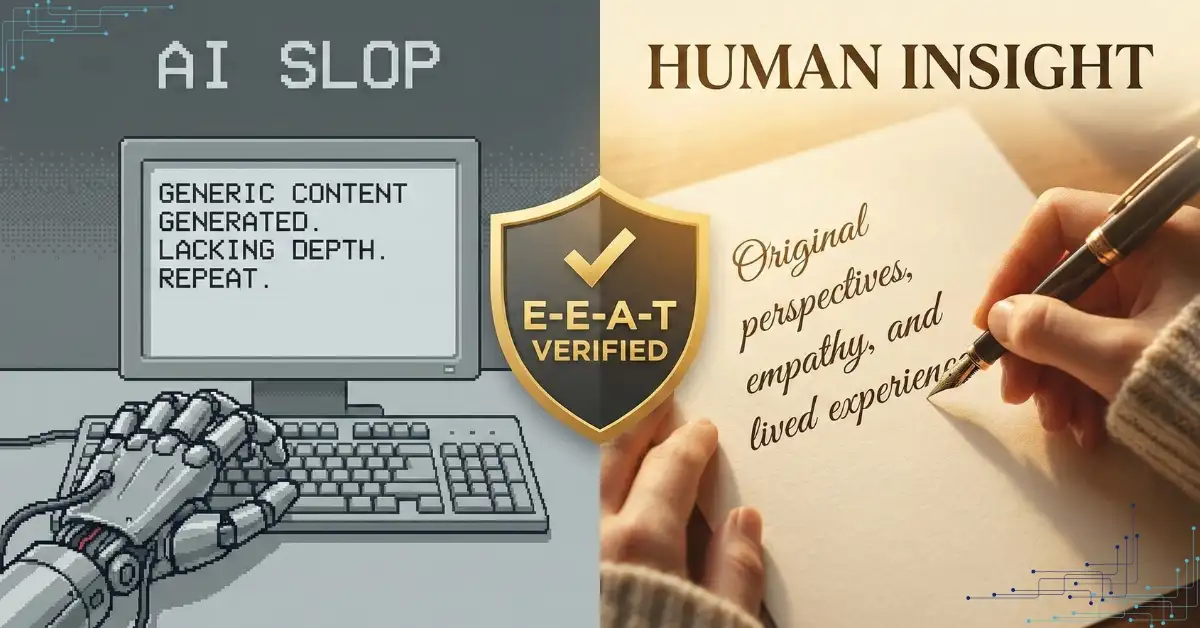
You cannot build a brand on generic slop. To rank in the Hybrid era, you need E-E-A-T (Experience, Expertise, Authoritativeness, and Trustworthiness). Originality.ai ensures that your content maintains the human nuance and quality signals required to pass the “turing test” of search algorithms.
Key Features
AI Content Detection: It scans your content and gives a probability score of whether it was written by a human or an AI. This helps you enforce quality standards with your team.
Fact-Checking: It can verify specific claims within your content against web sources, reducing the risk of publishing hallucinations.
Plagiarism Checking: It ensures your content is unique and not just a rehash of existing articles.
The Verdict
Originality.ai is your quality control department. It protects your domain reputation by ensuring you don’t accidentally publish content that looks like spam to a search engine.
Comparison: Traditional Rank Trackers vs. AI Analytics
A common misconception is that you can use your old SEO tools to track this new ecosystem. While legacy platforms are adding AI features, they are fundamentally built on a “Keyword & Link” architecture, not a “Prompt & Answer” architecture.
Here is how the specialist capabilities of LLMClicks.ai compare to the generalist power of Semrush and Ahrefs.
Feature
Semrush / Ahrefs
LLMClicks.ai
Core Architecture
Search Engine Retrieval (Google/Bing)
LLM Synthesis (ChatGPT/Claude/Perplexity)
Primary Metric
Keyword Rankings (Position 1-100)
Share of Voice (Mention Rate %)
Sentiment Analysis
Limited (Link-based)
Deep (Positive/Negative/Neutral)
Hallucination Tracking
No
Yes (Accurate vs. Incorrect)
Citation Tracking
Backlinks
AI Sources (e.g., Reddit, Quora, News)
Bot Detection
Basic (Googlebot)
Advanced (GPTBot, ClaudeBot, etc.)
The Takeaway: You do not choose between them. You use Semrush to win the SERP (Search Engine Results Page) and LLMClicks to win the Chat. They are two halves of a complete whole.
How to Build Your "Hybrid" SEO Stack for 2026
Successfully optimizing for the modern web requires a workflow that bridges the gap between traditional search and generative AI.
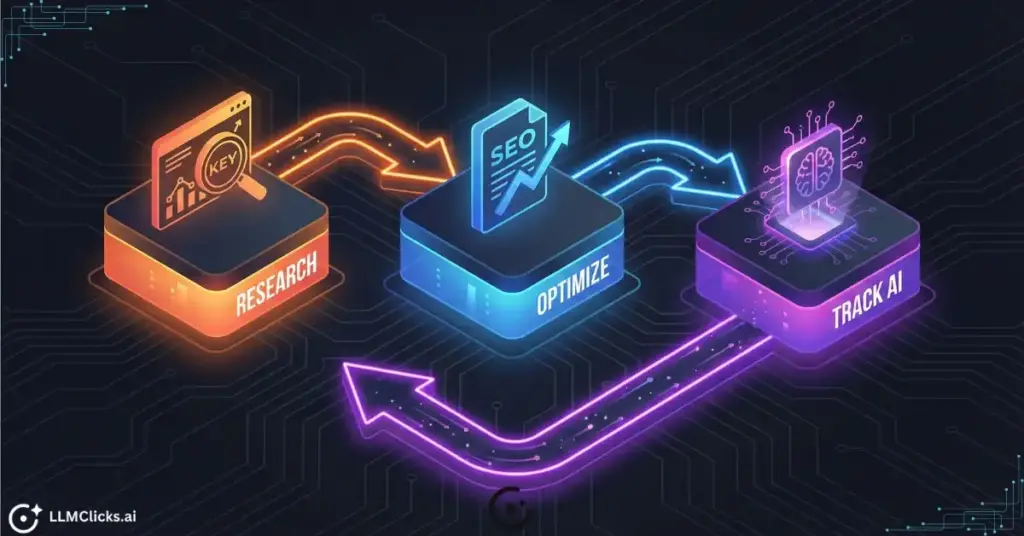
Here is the exact 4-step “Hybrid Stack” workflow used by forward-thinking agencies and brands in 2026.
Step 1: Research with Semrush
Start in the Old World. Use Semrush to identify high-volume keywords and user intent. Even AI models rely on this foundational demand data. You need to know what people are searching for before you can optimize for how the AI answers it.
Step 2: Architect with Frase or Surfer
Once you have your topic, use Frase or Surfer SEO to structure your content.
Use Frase to find the specific questions users ask and format your answers as clear, concise lists or definitions.
Use Surfer to ensure you are covering the full semantic map of entities related to your topic, increasing the confidence score of your content.
Step 3: Validate with Screaming Frog
Before you publish, run a crawl with Screaming Frog. Ensure that your schema markup is correct and that your JavaScript rendering is clean. If an AI bot cannot parse your page efficiently, it will simply move on to your competitor.
Step 4: Track & Optimize with LLMClicks.ai
This is the new critical step. Once your content is live, use LLMClicks.ai to monitor its performance in the “Zero-Click” world.
Check Visibility: Is ChatGPT citing you?
Check Accuracy: Is the AI describing your pricing correctly?
Check Sentiment: Is the context positive?
If you find that the AI is ignoring you, look at the Citation Rankings in LLMClicks.ai to see which sources (like G2, Reddit, or a specific industry blog) are feeding the model, and adjust your PR strategy to get mentioned there.
Final Thoughts: Don't Fly Blind in 2026
The era of “guessing” what the AI thinks about you is over.
For the last decade, you would never launch a website without installing Google Analytics. You wouldn’t fly blind. You demanded to know where your traffic came from, who your users were, and what they clicked.
In 2026, launching a brand strategy without AI Visibility Tracking is exactly the same mistake.
The conversations are happening right now. Users are asking ChatGPT about your competitors. They are asking Perplexity for the best solution to their problem. They are asking Claude to compare pricing.
If you are not tracking these conversations, you cannot influence them. You are leaving your reputation in the hands of a black box.
The tools on this list represent the new infrastructure of search. They give you the eyes and ears you need to survive the platform shift. Whether you are an agency protecting your clients or a brand protecting its revenue, the time to build your Hybrid SEO Stack is now.
Start by auditing your visibility. See exactly what the AI is telling your customers. Because if you don’t control your brand narrative inside the answer engine, someone else will.
Frequently Asked Questions (FAQs)
Q1. Are there any free AI SEO tools available?
Ans: Yes, several powerful tools offer free tiers or trials. Perplexity is free for research and competitor analysis. ChatGPT (the free version) can be used for basic content ideation and prompt testing. Screaming Frog allows you to crawl up to 500 URLs for free, which is perfect for smaller sites. However, for deep analytics, visibility tracking, and automated reporting, paid tools like LLMClicks.ai or Semrush are necessary investments.
Q2. What is the best AI SEO tool for small business?
Ans: For small businesses with limited budgets, the focus should be on ROI. LLMClicks.ai is often the highest-leverage tool because getting cited in a single AI answer (like “Best Plumber in [City]”) can drive high-intent leads without the expense of a massive link-building campaign. Pairing this with Frase for affordable content optimization creates a lean, effective stack.
Q3. Can AI tools replace SEO agencies?
Ans: No, but they change the job description. AI tools replace manual grunt work like keyword clustering and basic drafting. They do not replace strategy. Agencies that use tools like LLMClicks.ai are pivoting to ‘AI Visibility’ Audits, allowing them to charge for reputation management rather than just backlinks. This is a higher-value service than traditional backlink building.
Q4. Will using AI-generated content hurt my Google ranking?
Ans: Google has explicitly stated that it rewards high-quality content, regardless of how it is produced. However, unedited, mass-produced AI content often lacks E-E-A-T (Experience, Expertise, Authoritativeness, and Trustworthiness). Using tools like Surfer SEO to optimize your drafts and Originality.ai to check for “robotic” patterns ensures your AI-assisted content remains competitive.
Q5. How do I fix an AI hallucination about my brand?
Ans: If a tool like LLMClicks.ai alerts you that ChatGPT is quoting the wrong price for your product, you cannot “edit” the AI directly. You must fix the source. The AI is likely pulling that bad data from an outdated review site, a confusing pricing page on your own site, or a third-party article. You need to update those sources, request corrections, and use schema markup to explicitly tell the bots the correct information.
Shripad Deshmukh is the Founder of LLMClicks.ai and a veteran SaaS entrepreneur with over 15 years of experience in SEO and digital growth. He has founded four companies and built industry-leading platforms like GMB Briefcase, Citation Builder Pro, and Agency Simplifier. Today, Shripad focuses on Generative Engine Optimization (GEO). He helps brands build technical visibility across AI search engines like ChatGPT, Perplexity, and Gemini.
Leveraging cutting-edge AI technologies into your workflow, driving efficiency, innovation, and growth.