Published on: 12-Jan-2026 | 2300 words | 11-minute read
The era of “10 blue links” is fading. We are entering the age of the Answer Engine.
For digital marketers and SEO professionals, this shift poses a critical question: how does Perplexity compare to Google? We have previously analyzed the core differences between LLM visibility vs traditional SEO, but the short answer is: Perplexity focuses on answers, not clicks. More importantly, how do we rank in it?
Traditional SEO focuses on backlinks, keyword density, and technical crawlability to rank a URL. Perplexity AI focuses on information extraction. It does not just want to point users to a page. It wants to read the page, understand it, and summarize it directly for the user.
This has created a blind spot in our industry. Most marketing teams are using a standard perplexity seo tool or rank tracker that measures position, but they are not measuring citation capability. They are flying blind and wondering can perplexity help with seo optimization or if it will simply steal their traffic.
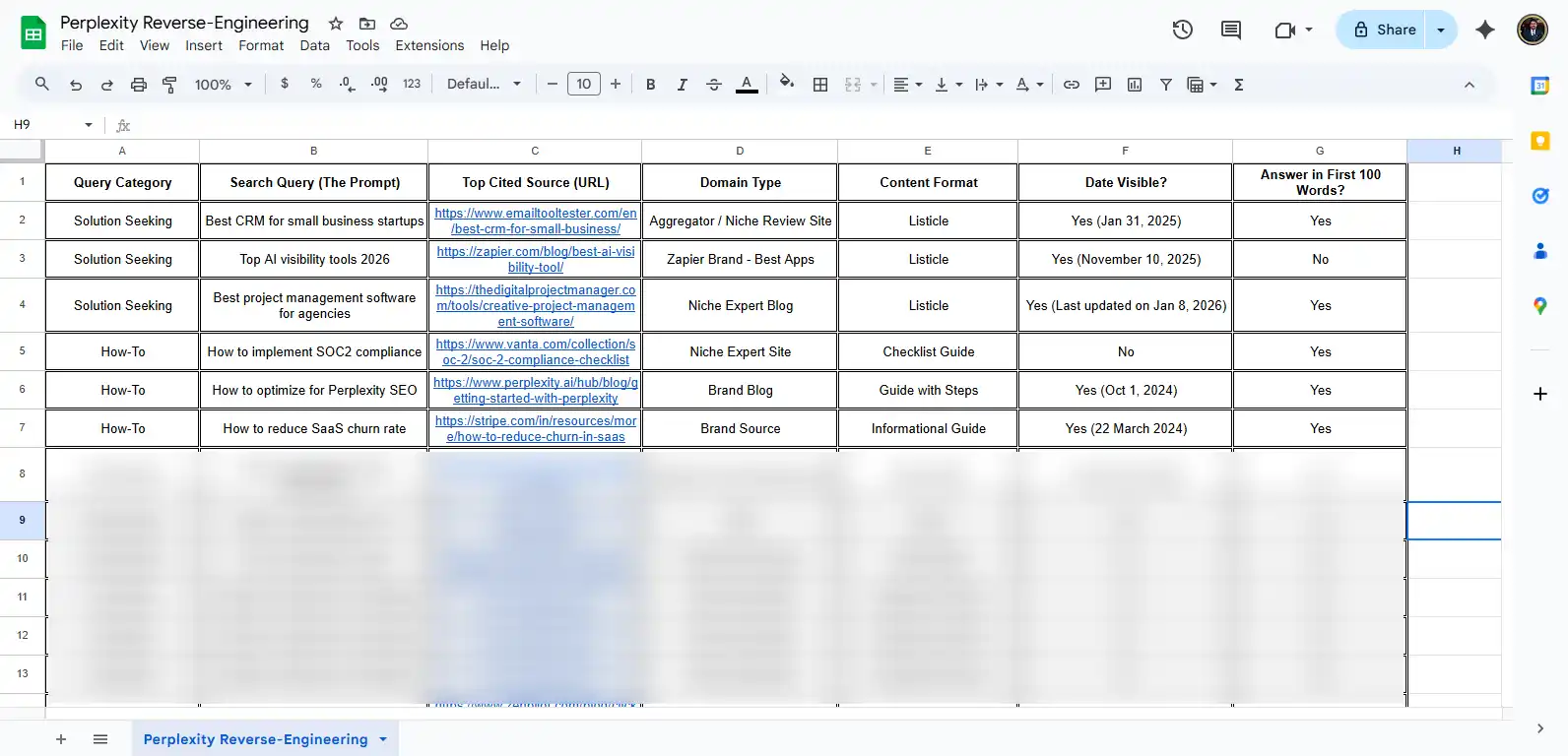
To understand this black box, we did not just guess. We conducted a data-backed study to reverse-engineer the citation logic. We analyzed 30 unique search queries across Informational, Transactional, and Technical categories to find the common patterns.
The results were surprising. Being the biggest brand did not guarantee a citation. Instead, being the most structured source did. If you are trying to figure out how to use Perplexity AI for SEO, the secret often lies not in your software but in how you format your answers.
Before we dive into the data, here is a quick breakdown of how the rules of the game have changed:
Feature
Traditional SEO (Google)
Perplexity AEO (Answer Engine)
Primary Goal
Rank #1 on a list of links.
Be cited as the direct answer source.
User Intent
"Find a page that might have the answer."
"Give me the answer immediately."
Content Structure
Long-form, comprehensive, "skimmable."
Structured data, concise definitions, direct.
Key Metric
Organic Traffic / Clicks / CTR.
Citations / Brand Mentions / Trust.
Authority Signal
Backlinks (DR) & Keyword Density.
Topical Authority & Information Density.
Freshness
Important for news; less for "evergreen."
Critical; heavily filters for date.
Best Format
Ultimate Guides (2000+ words).
Tables, Lists, & "Golden Paragraphs."
Methodology: How We Tested
We kept our dataset focused to ensure accuracy. We looked at 30 specific queries across SaaS, Marketing, and Tech sectors. These ranged from simple definitions like “What is Generative Engine Optimization” to complex requests like “Best CRM for small business startups.”
For each query, we analyzed the “Top Cited Source.” This is the URL that Perplexity chose to feature as Source #1 in its answer. We evaluated these winners based on four key metrics:
Domain Type: Is it a brand, an aggregator, or a niche expert?
Content Format: Is the page a listicle, a guide, or a comparison table?
The BLUF Score: Did the content answer the main question in the first 100 words?
Date Visibility: Was a clear publication date visible to the parser?
Here is what the data revealed.
Finding #1: The "BLUF" Rule (Bottom Line Up Front)
If there is one metric that predicted success more than any other in our dataset, it was the “First 100 Words” test.
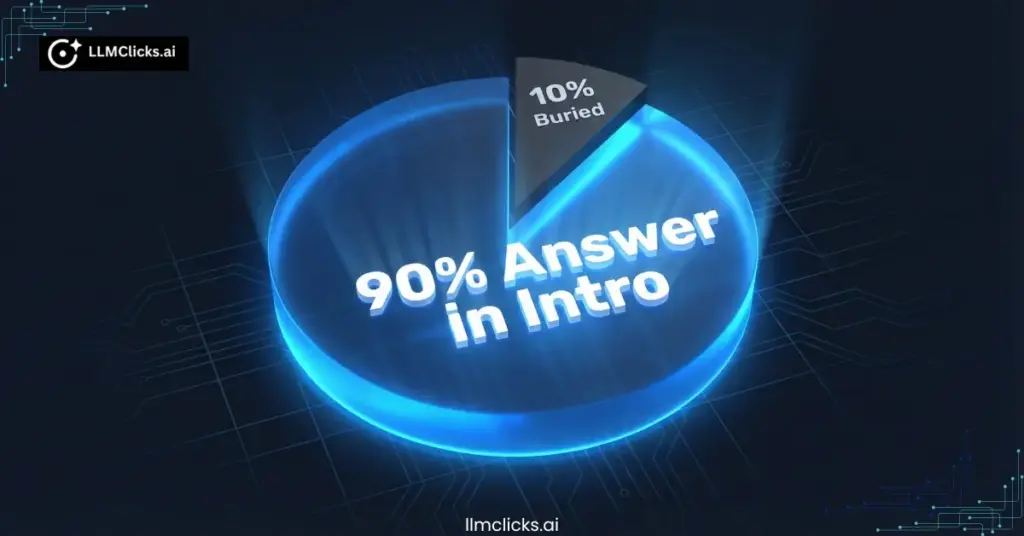
In our analysis of 30 diverse queries, 90% of the top-cited sources answered the user’s core question within the first 100 words of the content.
We call this the BLUF Rule: Bottom Line Up Front.
To understand why this happens, you have to understand how can perplexity ai assist with seo optimization from a technical perspective. Perplexity uses Large Language Models (LLMs) to process vast amounts of text. These models have a “context window” which limits how much text they can process effectively at once.
When Perplexity scans the web for an answer, it acts as a summarization engine. It looks for a clear and concise definition that it can verify and serve to the user immediately.
The old SEO strategy involved writing 2,000-word blog posts with long introductions to keep the user on the page. You would often bury the actual answer in the middle to force scrolling.
Perplexity rejects this. The engine scans your intro. If it sees fluff or generic sentences, it marks the content as low-density and moves to the next source. If it sees a direct definition, it grabs that text, cites you, and moves on.
Example from the Study:
We looked at a query about “SaaS churn rates.” The winning source was a guide from Stripe. It did not start with the history of SaaS. It defined “churn rate” and gave the formula in the very first paragraph. Competing pages that buried the definition under three subheaders were ignored.
Actionable Insight:
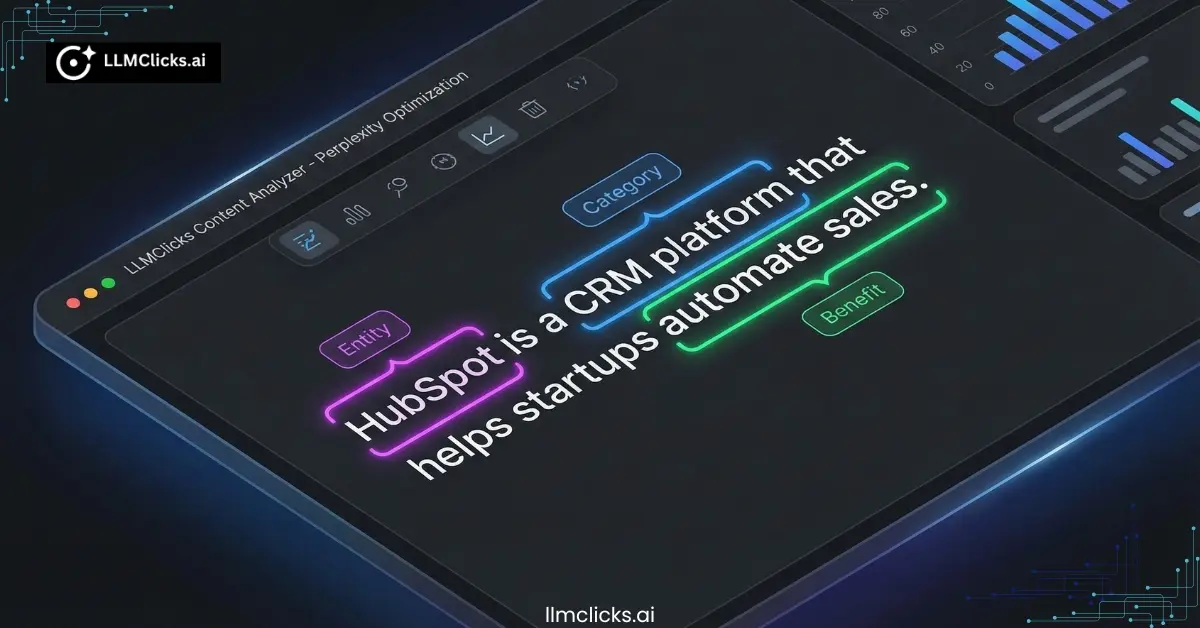
Review your top 10 performing blogs. Rewrite the first paragraph using this formula:
[Subject] is a [Category] that helps [Audience] achieve [Benefit].
Finding #2: Format Matching is the New Search Intent
Keywords are no longer the primary signal for intent. HTML structure is.
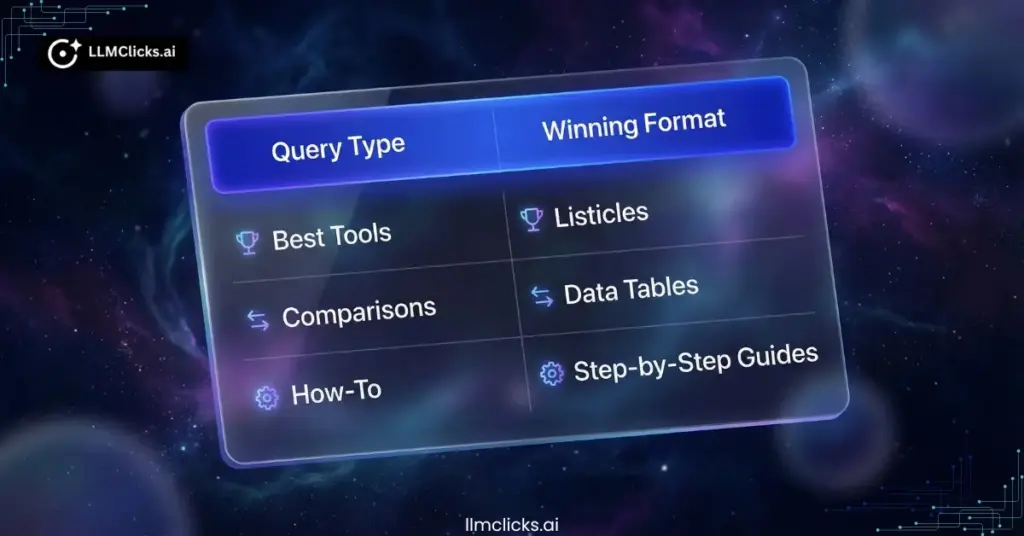
Our data showed a strict correlation between the type of question asked and the format of the cited page. Perplexity looks for an HTML structure that mirrors the output it needs to generate.
Solution Seeking: When users searched for “Best project management software,” Perplexity cited Listicles. It pulled from sites like Zapier and EmailToolTester because they used clear list structures (HTML <li> tags) that the AI could easily parse into its own list.
Comparison: When users asked “ClickUp vs Monday,” Perplexity cited pages that used Comparison Tables. It favored niche blogs like ZenPilot that had structured data tables over generic reviews that just used paragraphs.
How-To: For technical queries like “How to implement SOC2,” the engine cited Step-by-Step Guides that used numbered headers (<h2> or <h3>) for each step.
This means your content layout is now a ranking factor. For example, if you are writing a guide on the top AI visibility tracker tools, you cannot just write a wall of text. You need to structure your page as a listicle because that is the format the AI is trying to build.
Finding #3: Freshness & The "Date" Signal
Generative AI has a well-known weakness: hallucinations. To combat this, Perplexity aggressively filters for freshness, especially in tech and software queries.
In our study, 70% of the top citations had a visible date within the last 12 to 18 months.
This was most obvious in queries about software pricing or “best of” tools. For example, for the query “Best CRM for small business startups,” the winning source was a review site that had a clearly visible “Updated: January 2026” tag.
Perplexity seems to heavily weight the last-modified schema. It does this to avoid recommending tools that no longer exist or citing pricing that changed three years ago. If your content does not have a clear date signal, the engine may skip it to avoid the risk of serving outdated info.
Finding #4: Authority is Niche-Dependent, Not Just DR
One of the most encouraging findings for smaller sites is that you do not need to be a giant publisher to win.
We saw Perplexity cite ZenPilot (a niche agency blog) over massive general publishers for specific comparison queries.
This suggests that ‘Topical Authority outweighs Domain Rating (DR)’ in the AI citation model. Perplexity determines authority based on semantic relevance. If your entire site is about agency project management, you are viewed as a safer citation for that specific topic than a general news site that covers everything from politics to tech.
You do not need to be Forbes. You just need to be the expert on that specific micro-topic.
Technical SEO: Optimizing for PerplexityBot
While writing great content is crucial, you must ensure the AI can actually access it. While Google uses Googlebot, Perplexity uses its own crawler: PerplexityBot.
If you are blocking this bot, no amount of content optimization will help you.
1. Check Your Robots.txt
Ensure you are not accidentally blocking AI scrapers if you want to be cited.
User-agent: PerplexityBot
Allow: /
Note: Some webmasters block AI bots to prevent their content being used for model training. However, if your goal is GEO (Generative Engine Optimization) and traffic citations, you must allow access.
2. Speed & Rendering
Perplexity is an “Answer Engine,” meaning speed is a priority. Our analysis suggests that Perplexity prefers static HTML over heavy JavaScript-rendered content. It needs to parse the text fast to generate the answer in real-time.
Action: Test your pages in a “Text-Only” browser or use the “Inspect URL” tool in GSC to see the rendered code. If your content disappears because it requires JS to load, Perplexity likely cannot read it effectively.
Off-Page Strategy: The "Barnacle SEO" Loophole
One of the biggest differentiators between Google and Perplexity is how they treat user-generated content (UGC).
In our study, we noticed that for “Review” and “Opinion” queries, Perplexity frequently cited Reddit threads and Quora answers as primary sources, often ranking them higher than the official brand websites.
Why this happens
Perplexity’s LLM is trained to seek “human consensus.” It trusts high-upvote Reddit threads as authentic human validation.
How to exploit this
If you cannot rank your own domain for a highly competitive keyword (e.g., “Best SEO Software”), use the Barnacle SEO strategy:
Find the Thread: Search Google for site:reddit.com [your keyword].
Engage: Find the top-ranking threads that Perplexity is likely reading.
Contribute: Add a high-value comment (not spam) that answers the question and mentions your brand or solution naturally.
The result is that Perplexity often picks up these fresh, high-upvote comments and cites them as “According to users on Reddit…” By influencing the sources Perplexity trusts, you indirectly influence the answer it generates.
The Optimization Blueprint
Based on this analysis, here is your action plan. If you are using perplexity seo rank tracking software to monitor your performance, you should see improvements by applying these three steps.
1. Write a “Golden Paragraph”
Every page needs a clear definition at the very top.
The Formula: [Entity] is [Definition/Category] that helps [Target Audience] achieve [Primary Benefit].
Do not fluff the intro. State the answer immediately.
2. Structure for Scrapers
You need to audit your top pages to ensure the code is accessible. (We recommend performing a full 120-point AI accuracy audit). Ask yourself: Does the HTML structure match the user intent?”
If it is a “Best of” keyword, ensure you use <h2> tags for each product name.
If it is a comparison, add an HTML table summarizing the features.
Make it easy for a bot to scrape the key data points without reading the whole page.
3. The Citations Loop
Our data showed that many winning pages linked out to other authoritative sources. Do not be afraid to cite official documentation or data. It helps the AI verify your claims and may increase your trust score.
Steal Our Research Template
Don't start from scratch. Download the exact Excel Template we used to analyze these 30 queries. Use it to audit your own keywords and find your "BLUF" gaps.
The “death of SEO” has been predicted for a decade, but the rise of Perplexity hasn’t killed it, it has simply forced it to evolve.
As our study of 30 citations reveals, the days of keyword stuffing and fluff-filled introductions are over. The new battleground is Information Density. Ranking in 2026 isn’t about how long you can keep a user on the page; it’s about how quickly you can give them the answer.
The good news? Optimizing for Perplexity is actually just optimizing for a better user experience.
The exact signals that the AI prioritizes concise definitions (BLUF), clear data structures (Tables), and up-to-the-minute freshness are the exact same things human readers value.
If you shift your strategy to provide this value, you won’t just win the AI citation; you will win the user’s trust.
But don’t just guess, make sure you understand how to measure AI visibility so you can track your improved share of voice over time and prove the ROI of your structural changes.
Frequently Asked Questions (FAQ)
Q1. How can Perplexity AI assist with SEO optimization?
Ans: Perplexity AI helps with SEO optimization by acting as a research assistant. It can summarize competitor content, identify content gaps, and suggest semantic keywords. It is also a traffic source itself; optimizing for Perplexity (GEO) allows you to reach users who prefer answer engines over traditional search.
Q2. How does Perplexity compare to traditional SEO tools?
Ans: Traditional tools like SEMrush or Ahrefs focus on keyword volume and backlinks for Google rankings. Perplexity is not an SEO tool but a search engine. However, “Perplexity SEO” is becoming a discipline focused on structure, entities, and citations rather than just keywords and links.
Q3. What are the best Perplexity SEO tracking tools?
Ans: Currently, traditional rank trackers do not track Perplexity citations accurately. However, tools like GeoRanker or custom scripts using the Perplexity API are emerging as the best perplexity seo tracking tools. Most SEOs currently use manual queries or brand monitoring alerts to track citations.
Q4. Can Perplexity help with SEO optimization for small sites?
Ans: Yes. Our research shows that Perplexity favors niche authority and specific answers over high Domain Authority. Small sites can win citations by providing better structured data (tables, lists) and direct answers than large, generic competitors.
Q.5 Does Perplexity respect the robots.txt file?
Ans: Yes, Perplexity respects standard robots.txt directives. You can control its access using the User-agent: PerplexityBot command. Blocking it will prevent your site from appearing in Perplexity’s answers.
Shripad Deshmukh
Shripad Deshmukh is the Founder of LLMClicks.ai and a veteran SaaS entrepreneur with over 15 years of experience in SEO and digital growth. He has founded four companies and built industry-leading platforms like GMB Briefcase, Citation Builder Pro, and Agency Simplifier. Today, Shripad focuses on Generative Engine Optimization (GEO). He helps brands build technical visibility across AI search engines like ChatGPT, Perplexity, and Gemini.
Leveraging cutting-edge AI technologies into your workflow, driving efficiency, innovation, and growth.