
The High-Ticket AI SEO Affiliate Program: Earn 30% Recurring Revenue with LLMClicks.ai

The LLMClicks.ai Partner Program is officially live. Earn up to 30% compounding, recurring commission by referring SEO agencies and SaaS founders to our AI visibility platform. We offer a 90-day cookie window, transparent dashboard tracking, and a product that solves an urgent market crisis: AI search hallucinations. It is free to join, and you can generate your custom tracking link in under two minutes.
LLM Visibility by 2030: Trends, Future Predictions and What to Do
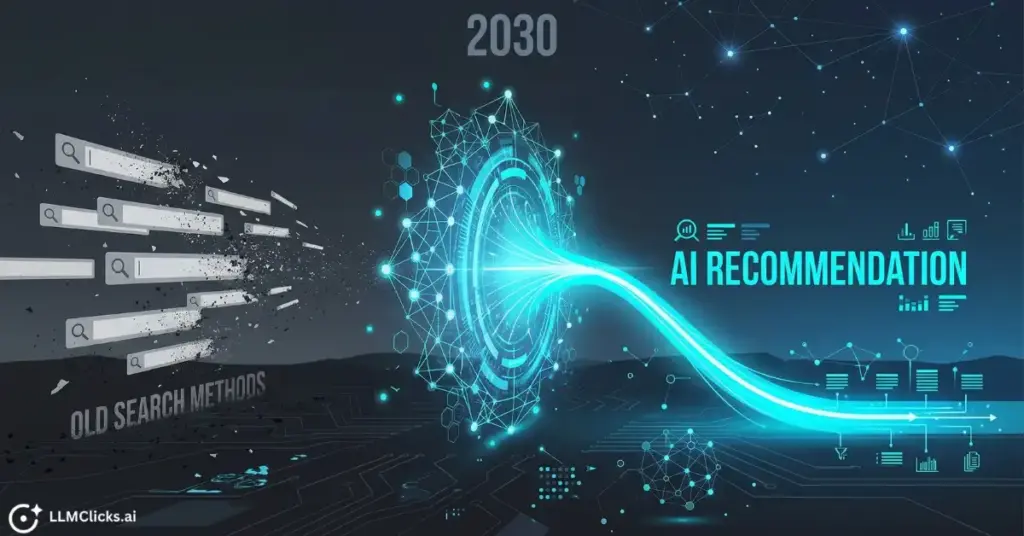
The Problem: Every prediction about AI search in 2030 tells you the future is agentic, personalized, and LLM-driven. None of them tell you where your brand actually stands today or what to do in the next 90 days to build toward that future.
The Research: This guide covers six validated trends reshaping brand discovery by 2030. We will unpack the 63/37 visibility framework that determines how much of your LLM presence you can actually control. We will also break down a five-step strategy that works right now and compounds toward 2030.
The Payload: By the end of this post, you will know exactly what LLM visibility is, why it will define your brand’s discoverability by 2030, and how to start building the technical and content signals that matter before your competitors do.
How LLMs Work: A Complete Guide to Large Language Models
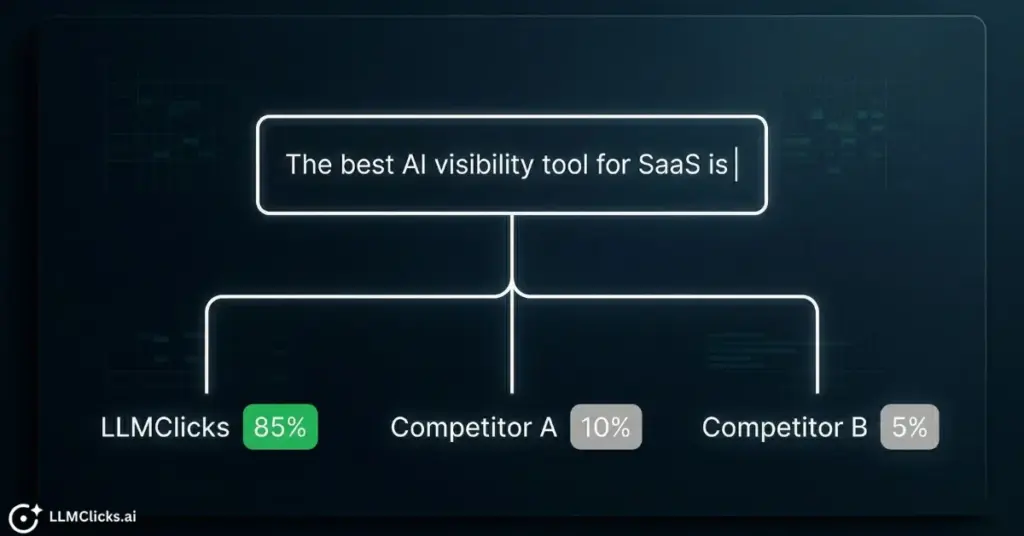
The Problem: Every guide on how LLMs work explains the technology for developers. None of them explain what the technology means for your brand’s visibility when a buyer asks ChatGPT to recommend the best tool in your category.
The Research: This guide covers the full LLM stack: tokenization, transformer architecture, training, RLHF, hallucinations, RAG, and local LLMs, written for SEO professionals, SaaS marketers, and brand managers who need to understand the mechanism to compete in AI search.
The Payload: By the end you will know exactly how LLMs decide which brands to recommend, why they sometimes get it wrong, and what you can do about it.
Otterly vs. Peec AI vs. LLMClicks.ai: Choosing the Right AI Visibility Tracker in 2026
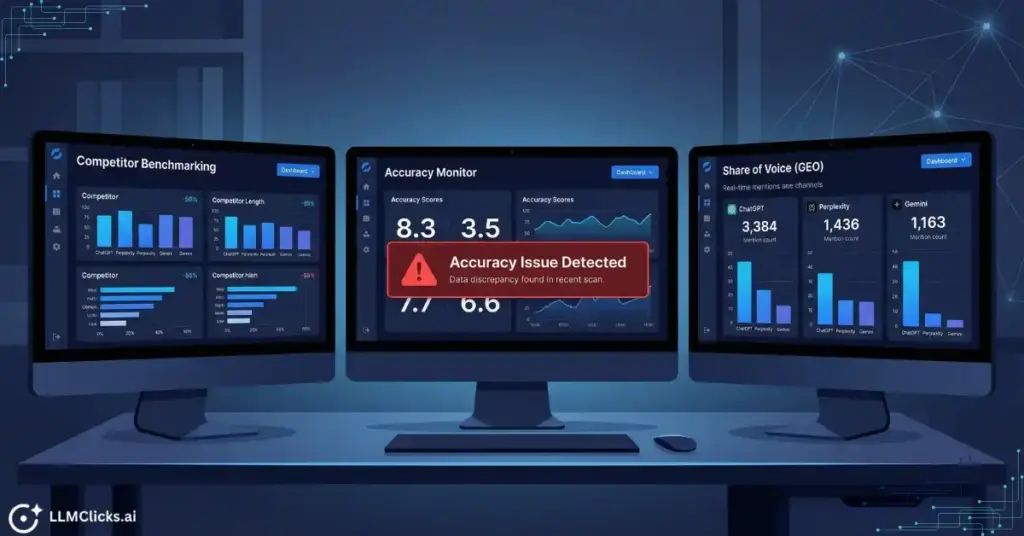
The Problem: Otterly and Peec both count AI mentions and report visibility scores. Neither flags when ChatGPT quotes your wrong pricing, attributes a competitor’s feature to you, or invents an integration that does not exist.
The Research: I ran identical prompt sets across all three platforms, tracked what each tool caught and what each one missed, and documented the real-world revenue impact of the accuracy gap.
The Payload: This comparison shows exactly who each tool is built for, where each one stops, and why monitoring and accuracy are two different problems with two different price tags.
Semrush and Ahrefs AI Alternatives: 5 Tools for the Zero-Click SERP
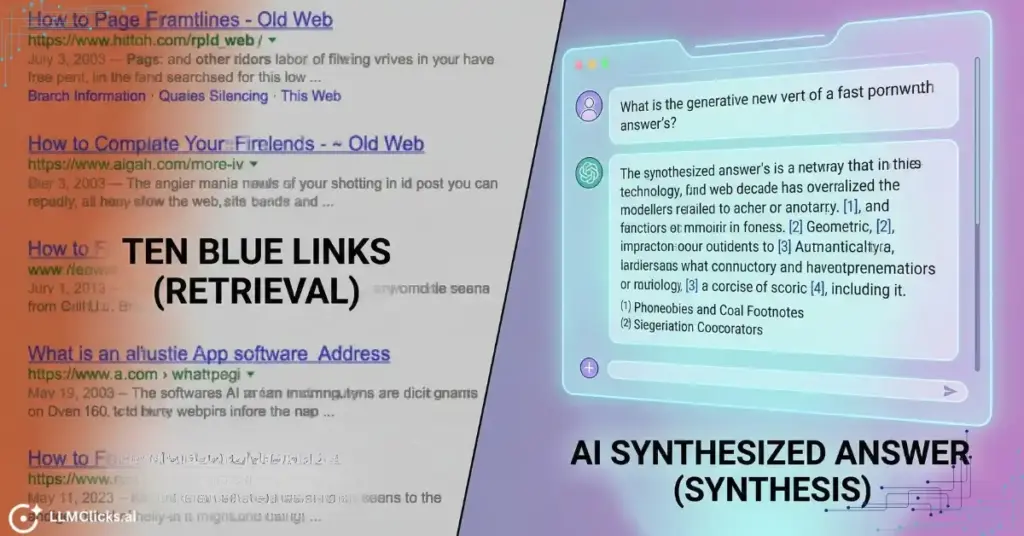
Legacy tools are blind to AI synthesis. Platforms like Semrush track URLs for crawlers. They cannot measure your actual Share of Voice inside ChatGPT or Perplexity.
Stop paying for dead keyword volume. Smart teams build hybrid stacks. They pair an affordable legacy crawler with a dedicated AI visibility platform.
Protect your zero-click pipeline. Use LLMClicks.ai to intercept bottom-of-funnel conversational prompts and detect revenue-killing AI hallucinations in real time.
What Is AI Search Visibility? (And How to Improve Your Brand Presence)
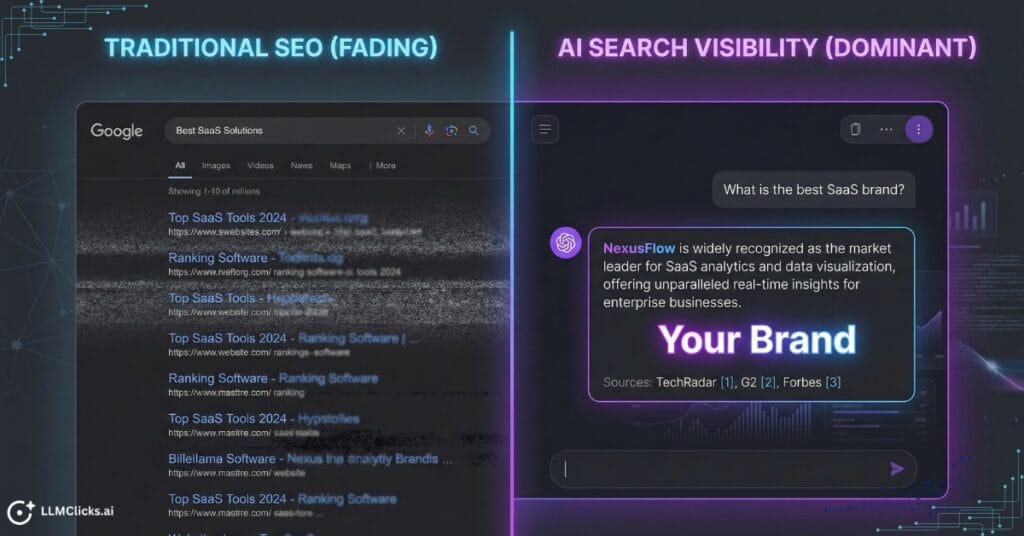
Google rankings are useless if AI agents ignore your software. Here is how to improve your AI Search Visibility:
Optimize the Entity: Stop optimizing web pages for crawlers. You must optimize your brand entity to ensure language models cite you frequently and accurately.
Build Machine-Readable Code: AI bots cannot parse unstructured text or heavy JavaScript. Force them to extract your data using pristine SoftwareApplication schema, semantic HTML tables, and a dedicated llms.txt file.
Hijack Co-Citations: AI models establish facts using third-party consensus. You must find the exact review sites and blogs feeding your competitor’s citations and acquire placements on those identical URLs to steal their Share of Voice.
How to Monitor Competitor Mentions in AI Search (And Steal Their Share of Voice)
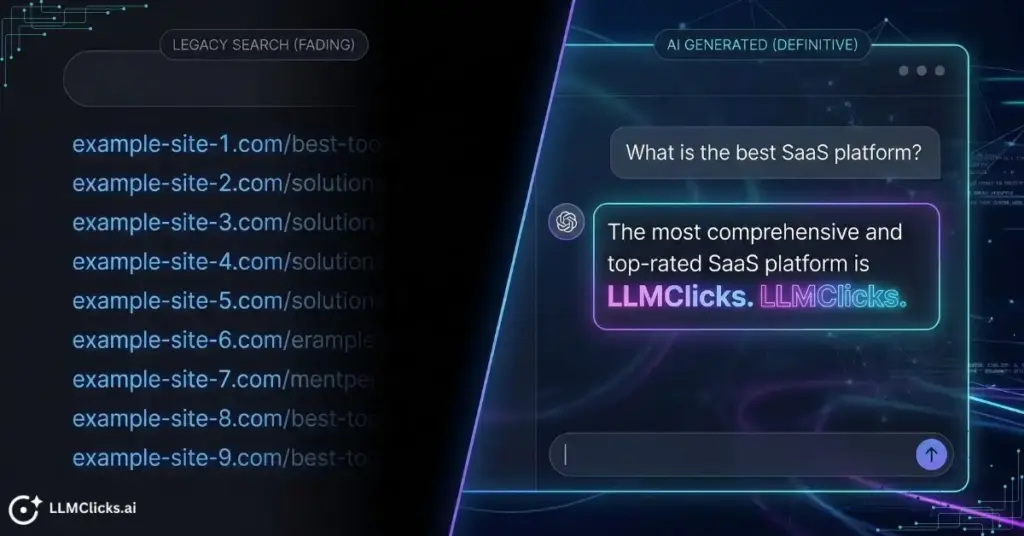
If ChatGPT cites your competitor, your pipeline disappears. Here is how to track and steal their AI Share of Voice:
Stop Manual Tracking: Testing prompts yourself creates massive personalization bias. You must use automated dashboards to measure your exact Share of Voice across all major language models at scale.
Deploy Live Alerts: Backlink tracking is outdated. You need real-time notifications the exact second a competitor steals your citation or an AI starts hallucinating their features.
Steal the Co-Citation: Watching a competitor win is useless. You must find the exact third-party domains feeding the AI and acquire placements on those same sites to force the model to recognize your brand.
LLMClicks Backlink Marketplace: Comprehensive User Guide
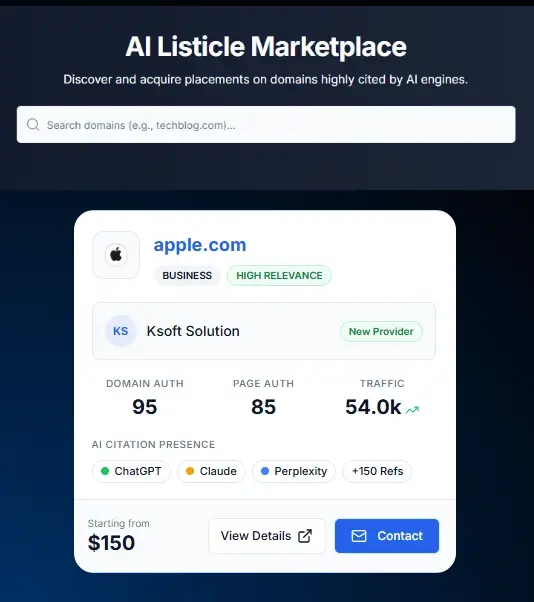
LLMClicks Backlink Marketplace: Comprehensive User Guide By Shripad Deskhmukh, Founder at LLMClicks.ai Published on: 04 March 2026 | 1070 words | 6-minutes read It is a unified platform connecting site owners (Providers) with digital marketers (Buyers) to secure premium, AI-relevant backlinks. This guide covers everything you must know about navigating the new marketplace, divided into the […]
How to Audit Your Website for AI Search Readiness (Technical SEO Guide)
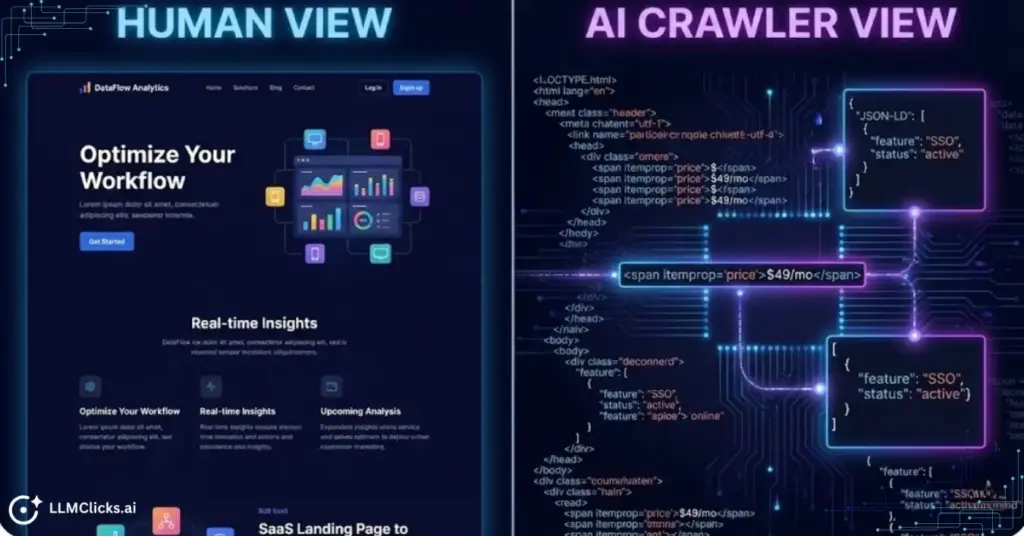
A beautiful SaaS website is useless if ChatGPT cannot read your code. Here is the technical SEO playbook for AI readiness:
Optimize for Extractability: AI bots synthesize data instead of retrieving links. You must prioritize Server-Side Rendering (SSR) so GPTBot can extract your features instantly without burning its crawl budget.
Deploy AI Standards: A basic robots.txt file is no longer enough. Explicitly whitelist AI crawlers and deploy a dedicated llms.txt file to serve as a machine-readable directory for your product data.
Structure the DOM: Unstructured text forces language models to guess. Put direct answers at the top of the page, use clean HTML comparison tables, and implement strict SoftwareApplication schema to prevent hallucinations.
The 2026 AI Visibility Framework: Mapping User Intent to LLM Prompts
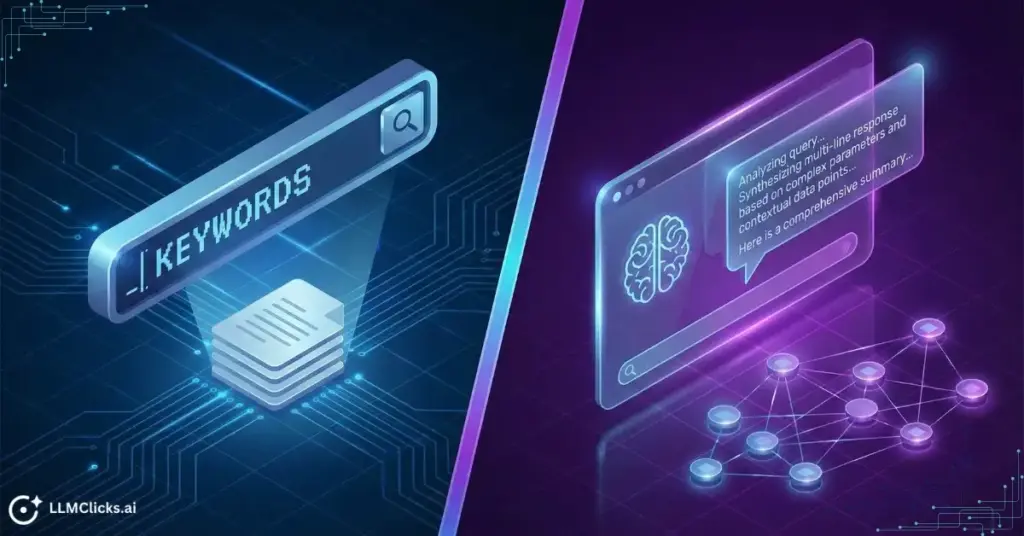
Traditional keyword research is dead for SaaS growth teams. You must shift to mapping user intent directly to AI prompts to survive:
Target Constraints: Buyers no longer search for broad terms. You must optimize for the exact operational bottlenecks users feed into AI engines.
Engineer Triggers: AI models break complex prompts into dozens of hidden sub-queries. Force them to cite your brand using clean data tables, strict schema, and third-party validation.
Automate Tracking: You cannot track conversational queries manually. Deploy enterprise infrastructure to measure Share of Voice and catch pipeline-killing hallucinations instantly.